Evaluation & Treatment
Does Insurance Cover an Oral Appliance for Sleep Apnea?
Published 7 min read

New Year, New Deductible: Why This Question Comes Up in January
January mail brings a new insurance card, an updated summary of benefits, and for a lot of people, a deductible that resets and has to be met all over again. If you have been thinking about oral appliance therapy for snoring or sleep apnea, a new plan year is a practical moment to finally ask: does insurance cover an oral appliance for sleep apnea, and how does that actually work.
The short answer is that it often does, though details depend on your diagnosis, your plan, and which type of insurance actually reviews the claim. Many people are surprised that dental insurance usually is not involved at all.
At Austin Sleep & Airway Health, we hear a version of this question at nearly every first appointment. This guide walks through how oral appliance coverage generally works, what a physician's diagnosis has to do with it, and what to ask your plan before your first visit.
Does Insurance Cover an Oral Appliance for Sleep Apnea?
For a diagnosed case of obstructive sleep apnea, oral appliance therapy is often covered, at least in part, by many medical insurance plans and by Medicare. Coverage typically depends on three things: a physician's diagnosis from a sleep study, a written prescription or order for the appliance, and a dentist qualified to provide and fit it.
This is different from asking whether a plan covers an appliance for snoring alone. Insurers generally treat snoring, without a diagnosed breathing disorder, as a comfort concern rather than a medical one, so a physician's diagnosis is usually the detail that opens the door to coverage.
Every plan's deductible, coinsurance, and prior authorization rules are different, and we are not going to guess at yours in a general guide. The more useful starting point is understanding how a request typically gets reviewed, which the next few sections cover.
Why Oral Appliance Therapy Is Often Billed to Medical Insurance, Not Dental
A common surprise: patients call their dental insurance first, since an oral appliance is a device worn in the mouth. For a diagnosed sleep breathing disorder, though, oral appliance therapy usually gets billed to medical insurance instead, because it treats a medical condition rather than a dental one.
According to the American Academy of Dental Sleep Medicine, oral appliances for obstructive sleep apnea are classified as durable medical equipment. That classification is why medical plans, not dental plans, are typically the ones reviewing the claim, the same way medical plans typically handle other durable medical equipment like CPAP machines.
This distinction matters because a claim sent to the wrong type of plan is often denied, which can feel discouraging even when the appliance itself would have been covered. When in doubt, call your medical insurance company first, not your dental plan.
What Medicare Says About Coverage for Oral Appliances
If you have Medicare, its coverage policy for oral appliances is publicly documented and fairly specific. Medicare covers a custom fabricated mandibular advancement device, the type of oral appliance most dentists provide, under its durable medical equipment benefit, provided a few conditions are met.
Those conditions include an in-person evaluation with your treating practitioner, a qualifying sleep study confirming obstructive sleep apnea, and a written order from that practitioner after reviewing your sleep study results. The appliance itself has to be provided and billed by a licensed dentist.
This is a general description of Medicare's own published policy, not a promise about any individual claim. If you have Medicare, ask your sleep physician's office and your prospective dentist's office to confirm your eligibility together before treatment begins.
What You Can Do Now: Getting Ready Before Your First Visit
Whether or not you have a diagnosis yet, a few simple steps make the insurance side of oral appliance therapy much less confusing later.
Start by locating your insurance card and finding the member services number for your medical plan rather than your dental plan. If you already completed a home sleep test or an in-lab sleep study, gather that report, since a copy of your results is often the first document a plan asks for.
If you have already tried CPAP and are struggling with CPAP therapy, write down specifics: how many nights a week you use it, what feels uncomfortable, and whether your physician has discussed switching to or adding an oral appliance. That kind of detail helps your physician document medical necessity clearly, which tends to move a request along.
Finally, ask your plan directly whether oral appliance therapy requires prior authorization, and whether a specific dentist network applies to your medical benefit. Getting that answer before your first appointment saves a step later.
When It's Worth an Evaluation
You do not need insurance clarity before you can talk to someone. A consultation is a reasonable next step if a partner has mentioned snoring or breathing pauses, if you suspect sleep apnea but have not been tested, or if CPAP has not been a good fit.
At your visit, Dr. Culotta starts with an airway focused exam, looking at tongue posture, jaw position, and nasal versus mouth breathing, along with your sleep and health history. When useful, our in-house 3D CBCT airway imaging gives her a closer look at airway structure in about 45 seconds. None of this replaces a physician's diagnosis, which only comes through a sleep study we coordinate with your physician.
If a sleep study confirms a diagnosis and oral appliance therapy looks like a good fit, that is also when insurance questions become concrete instead of hypothetical.
How Austin Sleep & Airway Health Helps With Insurance and Oral Appliance Therapy
Austin Sleep & Airway Health, in the Mueller area of Austin, focuses on the clinical side of oral appliance therapy: the airway exam, CBCT imaging when useful, the custom fitting, and the follow up adjustments that keep an appliance working well over time. Dr. Culotta, a Diplomate of the American Board of Dental Sleep Medicine, coordinates closely with your sleep physician throughout the process, since a physician's diagnosis and prescription are usually what a plan is looking for.
Because coverage details vary so much from one plan to the next, our team will work with you to understand coverage and any applicable benefits, starting with your first visit. Our custom oral appliance treatment process page walks through the evaluation, fitting, and follow up steps.
Frequently Asked Questions
Will my dental insurance cover an oral appliance for sleep apnea?
Dental insurance rarely covers an oral appliance for a diagnosed sleep breathing disorder, because the appliance treats a medical condition rather than a routine dental problem. Medical insurance is usually the plan that reviews the claim instead. If you are unsure which of your plans applies, start with your medical insurance company's member services line.
Does Medicare cover oral appliances for sleep apnea?
Medicare can cover a custom fabricated oral appliance for obstructive sleep apnea under its durable medical equipment benefit when specific requirements are met. Those requirements include a qualifying sleep study, an evaluation with your treating practitioner, and a written order for the appliance after your sleep study results are reviewed. A licensed dentist must provide and bill for the device.
Do I need a sleep study before insurance will consider an oral appliance?
Yes, a sleep study confirming an obstructive sleep apnea diagnosis is typically the starting point insurance plans and Medicare look for before considering coverage. The study can be a home sleep test or an in-lab study, and a physician reviews the results and confirms the diagnosis. We coordinate this testing with your physician as part of the evaluation process.
Will insurance cover an oral appliance if I only snore, without a sleep apnea diagnosis?
Insurance plans generally treat an oral appliance for snoring alone, without a diagnosed breathing disorder, as a comfort item rather than a covered medical benefit. A physician's diagnosis from a sleep study is usually what shifts an appliance from a personal purchase to a covered device. If snoring is your main concern, an evaluation can help clarify whether a sleep study makes sense first.
Why would an insurance claim for an oral appliance get denied?
Claims are often denied when they are sent to the wrong type of plan, when documentation is incomplete, or when a plan's specific criteria were not fully met beforehand. A denial is not always the end of the road, since many plans allow an appeal with additional documentation from your physician and dentist. Confirming requirements before treatment starts is the best way to avoid this altogether.
Where can I get help understanding oral appliance insurance coverage in Austin?
Austin Sleep & Airway Health, in the Mueller area of Austin, can walk you through what a plan typically requires once you have a diagnosis in hand. Call us at (512) 900-9715 to schedule an evaluation, or start with our adult sleep and airway screening if you are still deciding whether a sleep study is the right next step.
Ready to Talk About Coverage and Care?
If a new plan year has you finally asking whether insurance can help cover an oral appliance for sleep apnea, the most useful next step is a conversation, not a guess. Our custom oral appliance therapy page walks through the evaluation, fitting, and follow up process, and our team will work with you to understand coverage and any applicable benefits once a diagnosis is in place.
By Austin Sleep & Airway Health
This article is for general education. It is not a diagnosis and does not replace an evaluation with a qualified provider.
A comfortable option worth exploring
Learn how a custom oral appliance gently supports an open airway during sleep, and how we work alongside your sleep physician.
Keep Reading
Related articles

Evaluation & Treatment
Sleep Study Results Explained: AHI, Oxygen, and Next Steps
Your sleep study results are in. Here is what AHI, RDI, ODI, and your oxygen numbers actually mean, and what to ask your physician about next steps.
Read more7 min read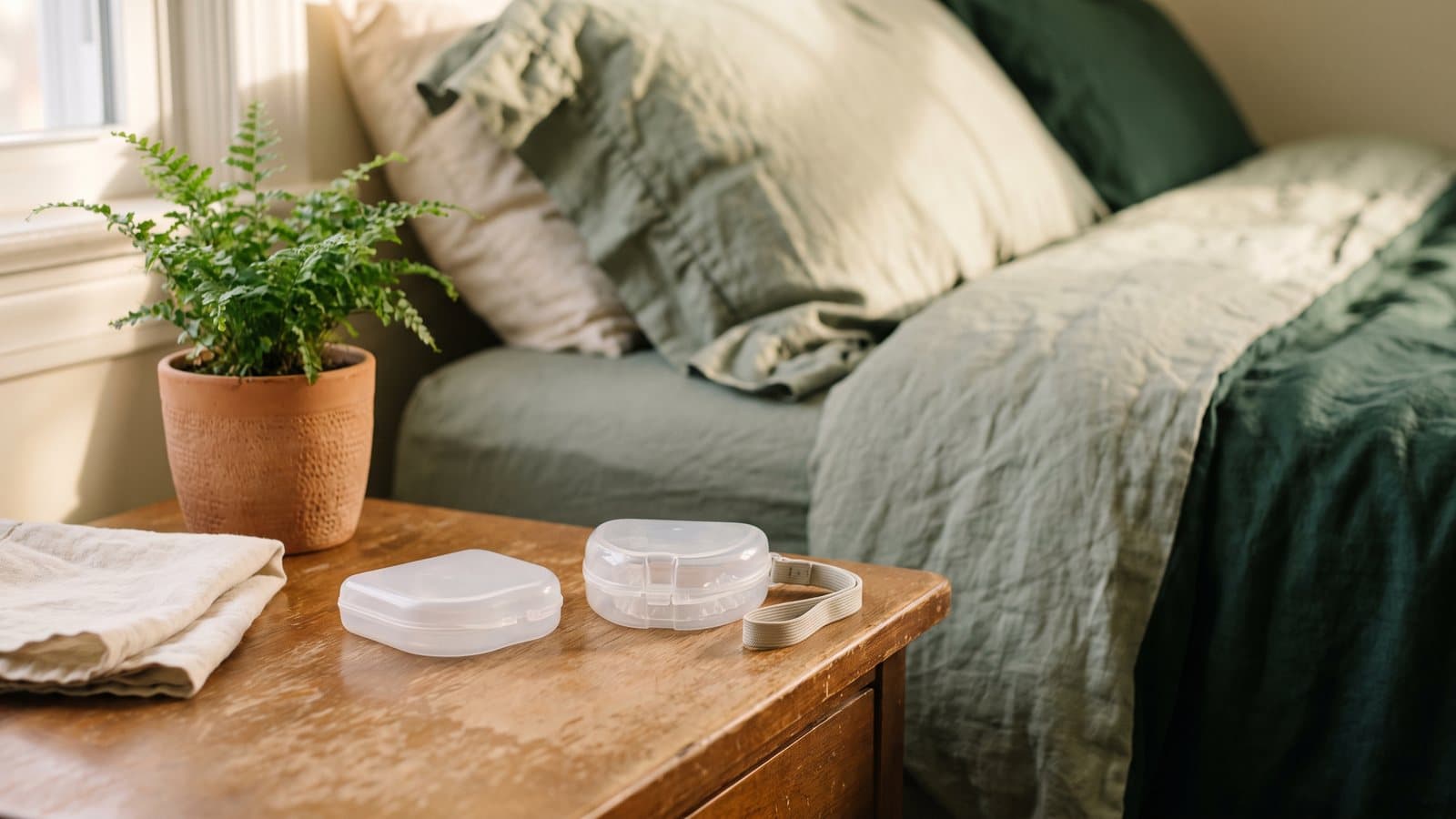
Evaluation & Treatment
Night Guard vs. Sleep Apnea Appliance: What's the Difference?
See how a standard night guard differs from a sleep apnea appliance, what the research really says, and when an evaluation helps you choose right.
Read more7 min read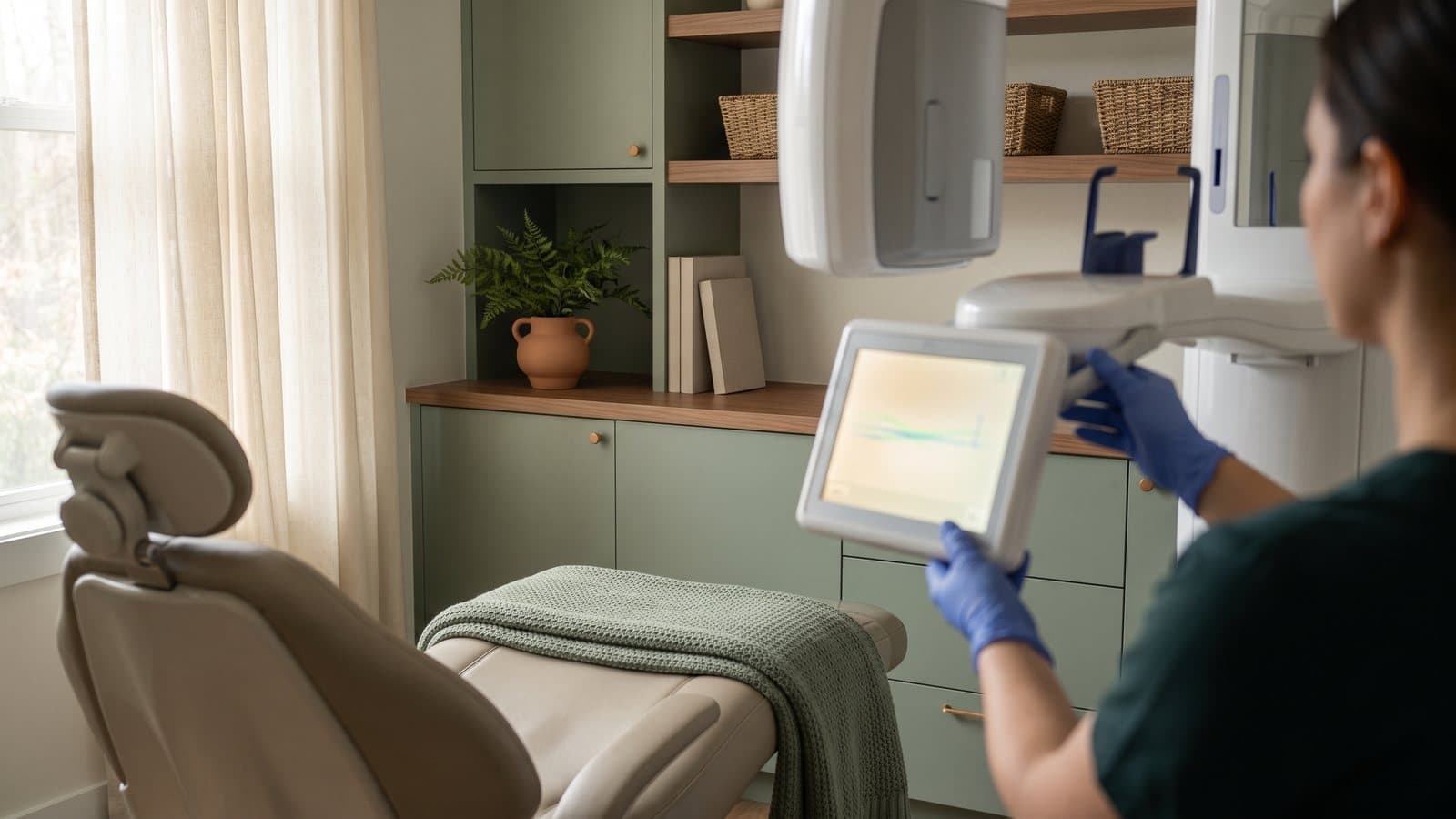
Evaluation & Treatment
Is a CBCT Scan Safe? Radiation and Airway Imaging Explained
See how much radiation a CBCT scan uses, how the ALARA principle keeps every scan low, and what Dr. Culotta looks for during your airway evaluation.
Read more7 min read
Free Sleep Apnea Quiz
Do You Have Sleep Apnea? Find Out Now
Snoring, fatigue, and restless nights could be signs of sleep apnea, a condition that affects your health more than you might realize. Take our quick, easy Sleep Apnea Quiz to uncover potential risk factors and determine if it’s time to seek expert care. In just a few minutes, you’ll gain valuable insights into your sleep health and take the first step toward better breathing, restful nights, and a healthier life. Don’t wait. Your journey to better sleep starts here!