
Evaluation & Treatment
Traveling for the Holidays With Sleep Apnea Therapy
Published 7 min read
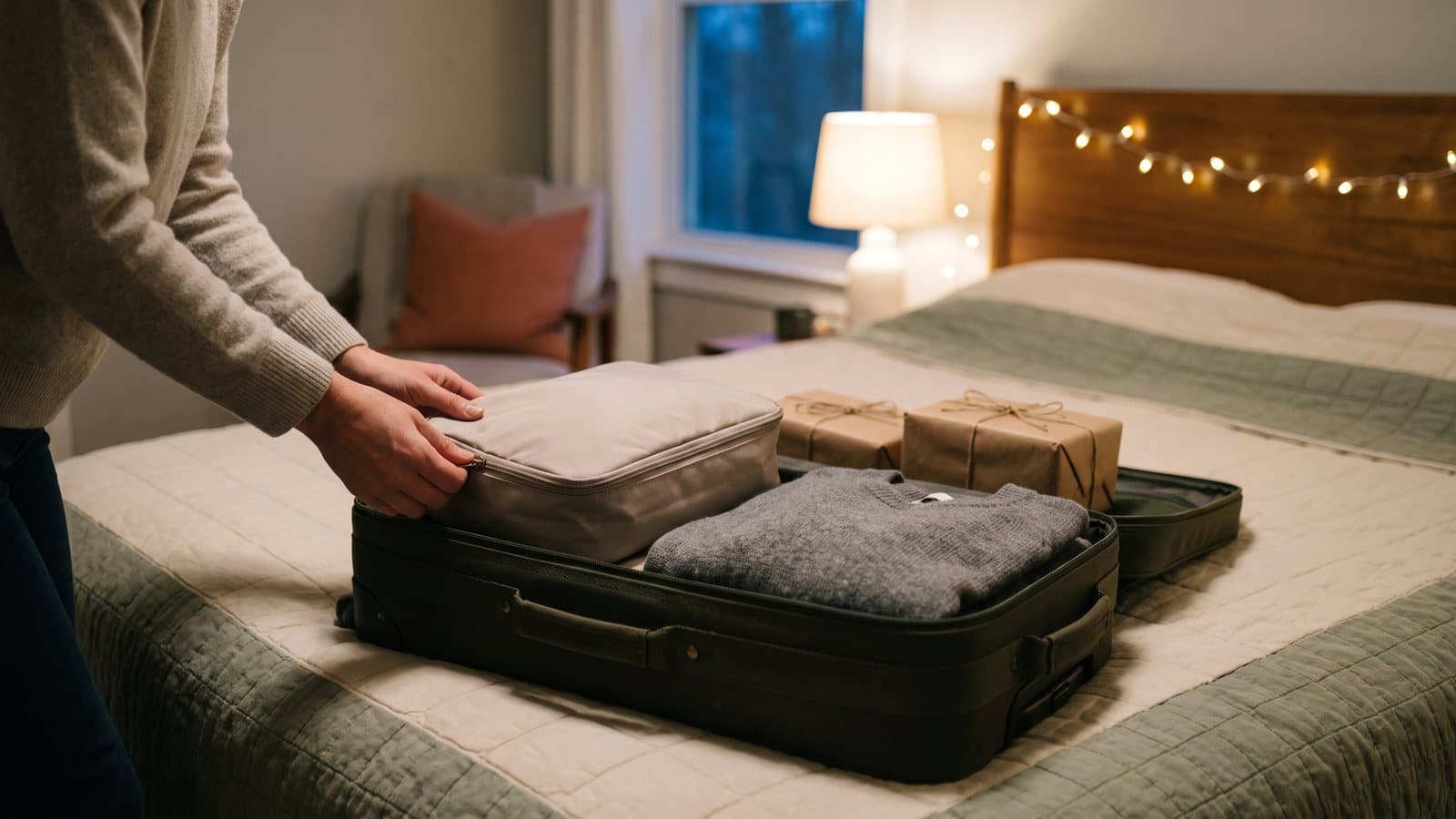
The Suitcase Is Open, and So Is the Question About Therapy
The suitcase is open on the bed, and somewhere between the sweaters and the gift bags sits your CPAP machine, or maybe just a small case holding your oral appliance. Grandma's house means a guest room with an outlet you have not tested. A hotel means brushing your teeth and storing your appliance at eleven at night after a late dinner.
Traveling with sleep apnea therapy, whether that is CPAP or a custom oral appliance, is more common than most people assume, and there are clear federal rules built around it. You are allowed to bring your device, and there are simple ways to make the trip easier on you and on whoever is sharing the room.
At Austin Sleep & Airway Health, we hear a version of this question every December: how do you keep up with treatment when your bed, schedule, and time zone are not your own? This guide covers what federal rules actually say about flying with a CPAP machine, how oral appliance travel compares, what to do about jet lag, and when a change in your travel routine is worth mentioning at your next visit.
Can You Bring a CPAP Machine on a Plane?
Yes. The Transportation Security Administration allows CPAP, BiPAP, and APAP machines through the security checkpoint, and federal rules for passengers with disabilities require airlines to let you use a ventilator, respirator, or CPAP machine onboard without counting it against your carry-on limit. Your CPAP travels in addition to your regular bag and personal item, not instead of them.
At the checkpoint, TSA guidance allows a CPAP, its mask, and its tubing to stay in the carrying case for X-ray screening, though an officer may still ask you to take it out or swab it for testing, which is routine. If your airline asks for advance notice to use a respiratory device onboard, that notice is often requested about 48 hours ahead, so check your airline's page before phone lines get busy over the holidays.
A few small habits save headaches at the gate. Empty the humidifier water chamber the night before you leave, since water left inside counts as a liquid at the checkpoint. If you travel with a rechargeable battery, keep it in your carry-on, and check the watt hour rating printed on it, since smaller batteries travel freely but larger ones need airline approval.
What About Traveling With an Oral Appliance?
An oral appliance travels differently. Because it is small, needs no power source, and fits in a case about the size of a phone, it moves through security with far less back and forth, and most people simply keep it in a carry-on bag or purse. If a screening officer asks, it is enough to say you have a medical device in your bag.
Wherever you are sleeping, the appliance needs the same basic care it gets at home. Rinse it after use, let it air dry before it goes back in its case, and avoid leaving it somewhere it can get too hot, such as a closed car, since heat can warp the material. If dinner runs long or the time change has you off schedule, wearing the appliance for however many hours you do sleep is still worthwhile. Consistency matters more than a perfect schedule.
Jet Lag, Late Nights, and Keeping Up With Treatment
Crossing time zones asks your body to reset its internal clock. The Centers for Disease Control and Prevention notes that adjustment generally takes about a day for each time zone you cross, with westward travel usually a bit easier than eastward travel. Add a holiday schedule of late dinners and early flights, and it becomes easy to let a night or two of therapy slip.
It is worth resisting that where you can. Missing a night or two will not undo months of progress, but travel fatigue already works against you, so keeping the routine you have built is one of the few things in your control on the road. If your trip involves a real time zone change, mention it to your physician beforehand, since they can tell you whether your plan needs any adjusting.
What to Pack and What to Track Before You Go
A little preparation goes a long way, especially during the busiest travel weeks of the year, when checked bags are more likely to be delayed. Pack your CPAP or oral appliance in a carry-on rather than a checked bag, bring a way to rinse and air dry it each morning, and note your current CPAP pressure setting in case you ever need a loaner. If you are headed somewhere with different outlets, pack the right adapter ahead of time rather than hunting for one at your destination.
While you travel, notice what your body tells you. Do you wake more often than usual. Does a partner mention snoring picked back up in an unfamiliar bed. A few notes on your phone are genuinely useful to bring to your next visit.
When It's Worth an Evaluation
One hard trip is not a reason to overhaul your whole plan. But a pattern is worth mentioning to your dentist or physician rather than something to quietly push through, such as several trips in a row where sticking with your device felt harder than it should, or a partner noting that snoring returns whenever you are away from your usual setup.
The same goes if you have never been evaluated at all, and travel is simply the first time you noticed how loud your snoring gets or how tired you feel the next day. Awareness is the first step, and as Dr. Culotta likes to say, "It's never too late to breathe, sleep, and feel better."
How Austin Sleep & Airway Health Supports Traveling With Sleep Apnea Therapy
We work with patients on both sides of this question, people using CPAP who want travel to go more smoothly, and people exploring custom oral appliance therapy for trips or everyday life. Dr. Culotta, a Diplomate of the American Board of Dental Sleep Medicine, starts with an airway focused exam and, when useful, our in-house 3D CBCT airway imaging.
If an oral appliance is part of your plan, we walk through how oral appliance therapy works from the first fitting through the adjustment period, then coordinate a follow-up sleep test with your physician once the fit is right. CPAP remains an effective, well established option too, and some people use both, keeping CPAP at home and an appliance for travel. Either way, we collaborate with your sleep physician, since only a physician can diagnose sleep apnea through a sleep study.
If travel has you wondering whether your current therapy fits your life, our adult sleep and airway screening is a calm, educational way to start organizing your thoughts before that conversation.
Frequently Asked Questions
Does a CPAP machine count as a carry-on bag?
No, under federal rules a CPAP machine does not count against your carry-on or personal item limit, so you can bring it in addition to your regular bag. Airlines that ask for advance notice to use it onboard often request about 48 hours.
Do I have to take my CPAP out of its bag at airport security?
Sometimes, since it depends on the airport and the individual TSA officer. TSA guidance allows the device, mask, and tubing to stay in the carrying case for screening, but an officer can still ask you to remove it or swab it for testing.
Can I bring my sleep apnea oral appliance on a plane?
Yes, an oral appliance is small enough to travel in a carry-on bag or a coat pocket, and it rarely draws extra attention at security. It uses no batteries or power cord, and its case protects it from damage in transit.
Will jet lag make my sleep apnea worse?
Jet lag itself does not change your airway, but the fatigue and disrupted sleep it causes can make it harder to stay consistent with treatment. Give yourself extra time to settle into a new time zone, and keep using your CPAP or oral appliance even on shortened nights.
What water should I use in my CPAP humidifier while traveling?
Distilled water is the best choice for a CPAP humidifier at home and on the road, since it will not leave mineral buildup in the reservoir. If distilled water is not available, bottled water is a better temporary choice than tap water.
Can I bring a spare CPAP battery on a plane?
Small spare CPAP batteries can travel in your carry-on without special approval, but larger batteries need airline approval, and the biggest ones cannot fly in the cabin at all. Check the watt hour rating printed on the battery before your trip.
Where can I get help with sleep apnea therapy before a trip in Austin?
Austin Sleep & Airway Health, in the Mueller area of Austin, can review how your CPAP or oral appliance is working before a trip. Call us at (512) 900-9715 to schedule a visit.
Travel With Confidence in Your Therapy
If travel keeps interrupting your CPAP routine, or you are curious whether an oral appliance would fit your next trip better, a conversation with Dr. Culotta is a reasonable next step. Visit our custom oral appliance therapy page to see how the process works, or reach out before your next trip so a plan is in place ahead of time.
By Austin Sleep & Airway Health
This article is for general education. It is not a diagnosis and does not replace an evaluation with a qualified provider.
A comfortable option worth exploring
Learn how a custom oral appliance gently supports an open airway during sleep, and how we work alongside your sleep physician.
Keep Reading
Related articles
Evaluation & Treatment
Sleep Study Results Explained: AHI, Oxygen, and Next Steps
Your sleep study results are in. Here is what AHI, RDI, ODI, and your oxygen numbers actually mean, and what to ask your physician about next steps.
Read more7 min read
Evaluation & Treatment
Night Guard vs. Sleep Apnea Appliance: What's the Difference?
See how a standard night guard differs from a sleep apnea appliance, what the research really says, and when an evaluation helps you choose right.
Read more7 min read
Evaluation & Treatment
Is a CBCT Scan Safe? Radiation and Airway Imaging Explained
See how much radiation a CBCT scan uses, how the ALARA principle keeps every scan low, and what Dr. Culotta looks for during your airway evaluation.
Read more7 min read
Free Sleep Apnea Quiz
Do You Have Sleep Apnea? Find Out Now
Snoring, fatigue, and restless nights could be signs of sleep apnea, a condition that affects your health more than you might realize. Take our quick, easy Sleep Apnea Quiz to uncover potential risk factors and determine if it’s time to seek expert care. In just a few minutes, you’ll gain valuable insights into your sleep health and take the first step toward better breathing, restful nights, and a healthier life. Don’t wait. Your journey to better sleep starts here!