
Kids & Teens
Back-to-School Sleep: Airway Signs Parents Can Spot
Published 7 min read
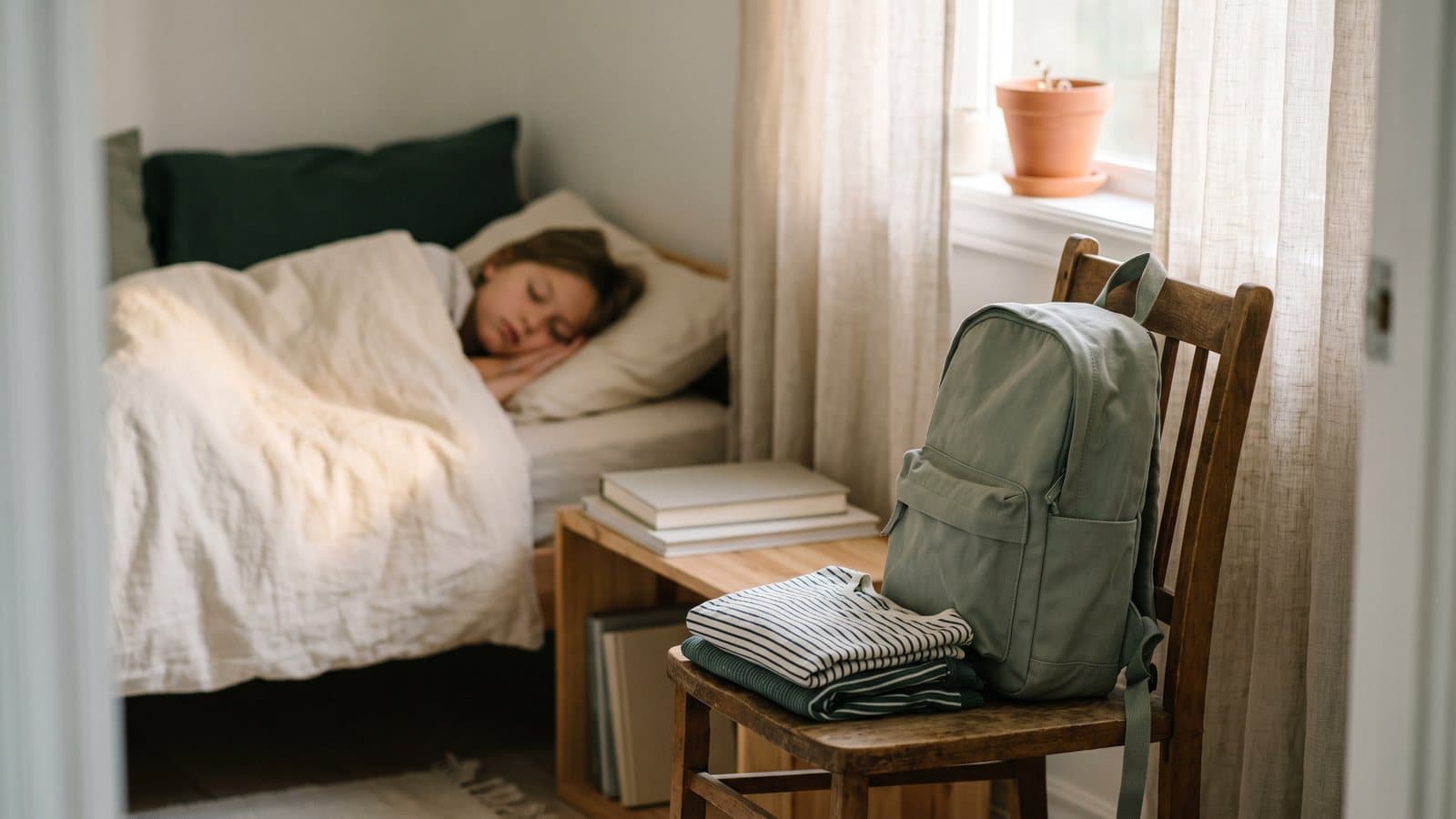
The First School Alarm After a Long Summer
It's 6:45 on an August morning. The backpack is packed, the alarm has gone off twice, and your child is still face down in the pillow. Back-to-school sleep is one of the biggest resets of the year for Austin families.
The first bell is close. Austin ISD starts on Tuesday, August 19, and Round Rock ISD and Manor ISD head back a week earlier, on August 12. For the first stretch, a tired kid is often just a body clock still on summer time.
At Austin Sleep & Airway Health, we see the school reset as a built-in chance to notice how your child actually sleeps and breathes. Below, you'll learn which tiredness is part of the adjustment, which signs are worth a closer look, what to track, and when an airway evaluation makes sense.
Is It Normal for Kids to Be Exhausted When School Starts?
Yes, some tiredness in the first week or two is common. After a summer of later nights and later mornings, many children run short on sleep until their internal clock catches up.
What matters is whether the tiredness fades once the schedule is steady. The American Academy of Sleep Medicine recommends 9 to 12 hours of sleep per 24 hours for children ages 6 to 12, and 8 to 10 hours for teens, ranges the American Academy of Pediatrics has endorsed.
Think of the school schedule as a filter. Once bedtime and wake time are consistent and the hours are in range, summer habits no longer explain the fog. If it stays anyway, how your child breathes at night moves higher on the list.
How to Reset Back-to-School Sleep Without a Nightly Battle
Gradual beats perfect. Many pediatric sleep programs suggest moving bedtime and wake-up time earlier in small steps over the week or two before school, rather than all at once the night before. A sudden two-hour shift tends to produce a child lying awake and frustrated.
Mornings do a lot of the work: open the curtains right away and keep weekend wake-ups close to school-day times so Monday feels less like starting over. In the evening, the American Academy of Pediatrics recommends avoiding screens for an hour before bed and keeping devices out of children's bedrooms at night. A kitchen charging spot makes that easier.
Airway Signs Parents Can Spot During the School Routine
The school day gives you more chances to observe your child. None of these signs is a diagnosis, and a pattern over several days means more than one rough morning.
At the alarm
A child who is very hard to wake, or who wakes unrefreshed after a full night, may not be getting restful sleep, according to Nationwide Children's Hospital. The National Heart, Lung, and Blood Institute (NHLBI) also lists morning headaches and a dry mouth among possible daytime signs of sleep apnea in children.
At breakfast and in the car
Watch how your child breathes when relaxed and awake. Lips resting apart, mouth breathing during a show, or dozing off on short car trips (a daytime clue Nationwide Children's describes) are all worth noting.
In the classroom
If a teacher mentions drifting attention, head-on-the-desk moments, or restlessness, add it to your notes. The NHLBI includes trouble paying attention at school among the daytime signs that can accompany sleep-disordered breathing, though it has many other possible causes, too.
After school and overnight
The after-school crash or homework meltdown becomes more meaningful when it pairs with nighttime clues: snoring on most nights, noisy or effortful breathing, pauses followed by a gasp or snort, a mouth that stays open all night, or very restless sleep. If snoring first caught your attention this summer, our guide to what child snoring can mean covers the nighttime side in more detail.
What to Track in the First Two Weeks of School
The first two weeks of school make an ideal observation window. A simple log on your phone or the fridge turns a vague worry into something a clinician can use. Each day, note:
- Bedtime, lights-out time, and wake-up time
- How hard the wake-up was, on a simple 1 to 3 scale
- Any snoring, mouth breathing, or pauses you hear when you check in at night
- Teacher comments about energy, focus, or mood
- Days with a cold or allergy flare, since congestion can change breathing for a while
If you hear snoring, record a short audio or video clip from the doorway. A minute of nighttime breathing is one of the most useful things to bring to any visit. Keep the log going on weekends, too. If Saturday mornings look just as foggy after a long night, that pattern is worth sharing.
When Is It Worth an Evaluation?
An evaluation is worth scheduling if, after two steady weeks with enough time in bed, you still see snoring on most nights, mouth breathing most of the time, mornings that remain a real struggle, or a teacher who keeps noticing sleepiness. If you notice pauses or gasping in your child's breathing, there's no need to wait out the two weeks. Mention it to your pediatrician soon.
The back-to-school checkup is a natural moment to bring it up. The American Academy of Pediatrics recommends screening children and teens for snoring at routine visits, and its clinical guideline advises a sleep study for children who snore and also show other signs of disrupted sleep. Only a physician can diagnose sleep apnea, through a sleep study, never from a checklist or a scan.
Snoring on its own is fairly common. ENThealth.org, from the American Academy of Otolaryngology, notes that about one in ten children snore regularly, while a smaller share have obstructive sleep apnea. A calm, thorough look beats guessing either way.
How Austin Sleep & Airway Health Helps Families at the Start of the School Year
Dr. Kacie Culotta, DMD, is a Diplomate of the American Board of Dental Sleep Medicine, with over a decade of experience as a family dentist, lactation counselor, and myofunctional specialist. She looks at your child's sleep from the airway's point of view and helps connect the dots with the rest of your child's care team.
A visit starts with a detailed sleep and health history (your two-week log is perfect here) and an exam of tongue mobility and resting posture, oral ties, palate width, bite, tonsil size, and nose versus mouth breathing. When helpful, in-house 3D CBCT airway imaging shows the airway, nasal passages, tonsils, adenoids, and jaw position. The scan takes about 45 seconds and uses low radiation. It's an awake snapshot, not a sleep study, and it does not diagnose sleep apnea.
For some children, the next step is a conversation about jaw growth and whether early palatal expansion may be appropriate through airway-focused dentistry. For others, it's working with the independent myofunctional therapists in our collaborative space, or coordinating with your pediatrician, a sleep physician, or an ENT. As Dr. Culotta says, "Positive change is possible at any age. Awareness is the first step."
Frequently Asked Questions
How much sleep does my child need on school nights?
The American Academy of Sleep Medicine recommends 9 to 12 hours per 24 hours for children ages 6 to 12, and 8 to 10 hours for teens. Count back from your school-day wake-up time to set bedtime.
How early should I start the school bedtime before the first day?
Start moving bedtime and wake-up time earlier about one to two weeks before school begins, in small steps, rather than all at once the night before. For Austin ISD families, early August is a comfortable time to begin.
Why is my child still tired even though they sleep enough hours?
If your child gets enough hours on a steady schedule and still wakes up tired, the quality of their sleep may be worth a closer look. Snoring, mouth breathing, and restless sleep can break up rest, along with other health factors your pediatrician can review.
Should I mention my child's sleep at their back-to-school checkup?
Yes, the back-to-school visit is a natural moment to raise snoring, hard mornings, or teacher comments about attention, since routine checkups already include a snoring screening. Bring your two-week log or a short audio clip so your pediatrician has more than a description from memory.
My child's teacher says they fall asleep in class. What should I do?
Treat it as helpful information rather than criticism, and start a two-week log of sleep times, wake-ups, snoring, and daytime energy. Bring the teacher's observations and your notes to your child's next checkup.
Where can I get my child's airway checked in Austin?
Austin Sleep & Airway Health offers airway-focused evaluations for kids and teens at 1701 Simond Ave, Suite 107A, in Austin's Mueller area. Call (512) 900-9715 or email us (hello@austinsleephealth.com). We're open Monday, Tuesday, Thursday, and Friday, 8:00 AM to 3:00 PM.
Start the School Year With a Clearer Picture
If a few of these signs sound familiar, a calm first step is our educational sleep screening for ages 6 to 12. It won't diagnose anything, but it can help you organize what you're seeing before a conversation with your pediatrician or with us. When you're ready, Dr. Culotta and our team would be glad to take a closer look at how your child breathes, sleeps, and grows.
By Austin Sleep & Airway Health
This article is for general education. It is not a diagnosis and does not replace an evaluation with a qualified provider.
Wondering about your child's sleep and breathing?
Our educational screening for children ages 6 to 12 takes a few minutes and helps you decide whether an airway evaluation is worth a look.
Keep Reading
Related articles
Kids & Teens
Why Is My Teenager Always Tired?
If your teenager is always tired despite sleeping in on weekends, here is what is typical teen sleep biology and when airway signs deserve a look.
Read more7 min read
Kids & Teens
Thumb Sucking and Teeth: What Summer Break Reveals
Thumb sucking and teeth: how a habit that lingers past toddler years can shape a child's bite and breathing, plus what to try this summer break.
Read more7 min read
Kids & Teens
Bedwetting and Sleep Apnea: Could Breathing Be a Factor?
Bedwetting and sleep apnea can be connected in some children. Learn common causes, how breathing may factor in, and when a closer look helps.
Read more7 min read