
Sleep Apnea & Snoring
Sleep Apnea and High Blood Pressure: What's the Link?
Published 7 min read
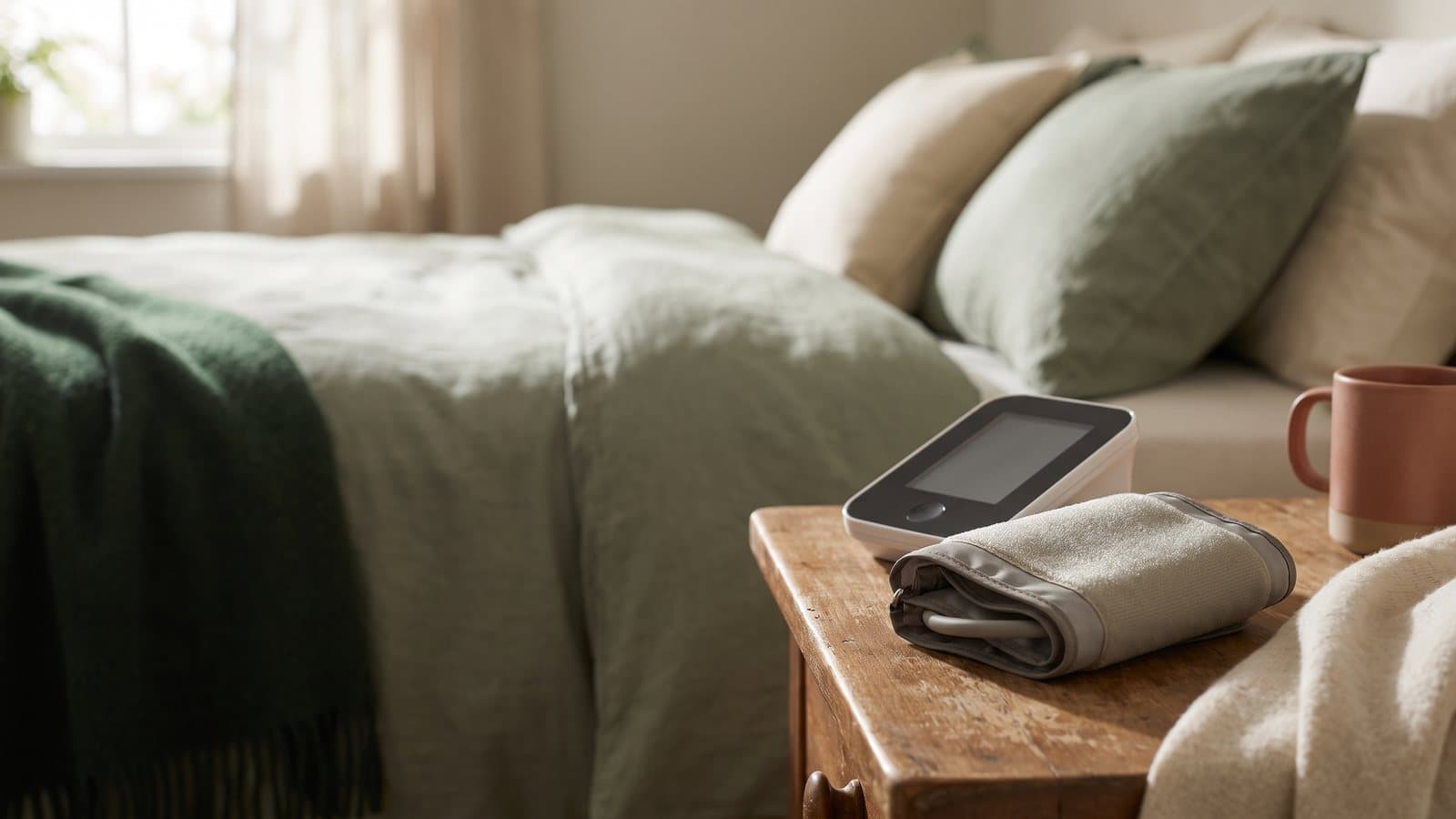
A Blood Pressure Reading That Doesn't Add Up
You have been checking your blood pressure at home the way your doctor asked, numbers logged in a notebook or an app. Most mornings the reading sits higher than you would like, even though you take your medication on schedule. At your last visit, before adjusting anything else, your doctor asked a question you did not expect: how do you sleep at night?
That question is not random. Sleep apnea and high blood pressure show up together often enough that many doctors now ask about snoring and breathing pauses before assuming a medication needs a change. The two conditions can feed each other, which can reshape how you and your doctor think about a reading that will not settle.
At Austin Sleep & Airway Health, we help adults understand what an airway evaluation can add to that picture. This guide covers how sleep apnea and high blood pressure connect, what a hard to control reading can mean, what to track before your next appointment, and when a sleep and airway evaluation is worth scheduling.
Sleep Apnea and High Blood Pressure: How They're Connected
Obstructive sleep apnea happens when the airway narrows or closes repeatedly during sleep, so breathing turns shallow or stops for short stretches. Each time that happens, oxygen levels drop and the body responds the way it would to any alarm: the heart beats faster, blood vessels tighten, and blood pressure spikes to help breathing restart. That cycle can repeat many times a night.
The American Heart Association notes that sleep apnea is linked to higher rates of high blood pressure, stroke, and coronary artery disease, and estimates that obstructive sleep apnea affects roughly 30 to 50 percent of people who have high blood pressure. The National Heart, Lung, and Blood Institute lists sleep apnea among the health conditions that can change how the body manages fluid, sodium, and hormone levels in ways that raise blood pressure over time.
Blood pressure normally dips somewhat during deep sleep. In obstructive sleep apnea, repeated arousals and oxygen drops can blunt that dip, so blood pressure stays higher around the clock rather than just at night. That is one reason a morning reading can look high even when daytime numbers seem reasonable.
When Blood Pressure Medication Doesn't Seem to Be Working
Most people whose blood pressure responds well to medication are not thinking about their airway. But when readings stay high despite taking prescribed medication as directed, sometimes called resistant high blood pressure, sleep apnea is one of the factors doctors consider.
Research shared through the American Academy of Sleep Medicine has found that adults with severe obstructive sleep apnea were considerably more likely to have blood pressure that stayed above goal, even while taking three or more blood pressure medications, compared with adults who had more moderate sleep apnea. The researchers described severe sleep apnea as a contributing factor, not the full explanation for a hard to control reading.
Signs Worth Mentioning to Your Doctor
If your blood pressure has been hard to control, it is worth mentioning to your doctor if you also snore loudly, if a partner has noticed breathing pauses or gasping, if you wake with a headache or dry mouth, or if you feel sleepy during quiet moments in the day. None of these signs confirms sleep apnea on its own, since only a physician can confirm it, through a sleep study. We never suggest adjusting blood pressure medication yourself; that conversation belongs with your prescribing doctor.
What to Track Before Your Next Appointment
A couple of weeks of notes can turn a vague hunch into something specific for your doctor or an airway evaluation. Track your blood pressure at the same times each day, the way your doctor recommended, and note whether readings run highest in the morning. Ask a partner to notice whether your snoring changes, pauses, or ends in a gasp, or record a few nights on your phone if you sleep alone.
Keep a short log of how you feel during the day: whether you wake rested or groggy, whether you have a headache or dry mouth, and whether you get up to use the bathroom overnight. Note your usual sleep position and whether congestion, allergies, or alcohol close to bedtime seem to make snoring louder. Bring these notes, along with your blood pressure log, to your next appointment.
When It's Worth a Sleep and Airway Evaluation
An evaluation is worth scheduling if your blood pressure has been difficult to control despite following your doctor's plan, especially alongside loud snoring, witnessed breathing pauses, or daytime sleepiness that a full night's sleep does not fix. It is also worth a look if a doctor has raised sleep apnea as a possibility, or if you are simply curious whether your airway plays a role.
It is never too late to start paying attention to this. Age, weight, and fitness level do not rule sleep apnea in or out, and adults who consider themselves generally healthy can still have an airway that narrows during sleep. Bringing it up with your doctor, or scheduling an evaluation, is a reasonable next step either way.
How Austin Sleep & Airway Health Helps With Sleep Apnea and High Blood Pressure
Dr. Kacie Culotta, DMD, is a Diplomate of the American Board of Dental Sleep Medicine and a Qualified Dentist with the American Academy of Dental Sleep Medicine. Her role on your care team is to look closely at your airway and connect what she finds with your physician, especially when blood pressure and sleep seem to be tangled together.
Our airway-focused exam looks at tongue mobility and resting posture, oral ties, palate width, bite, jaw joints, tonsil size, nasal versus mouth breathing, and signs of clenching or grinding, along with a detailed sleep and health history. We may also use in-house 3D CBCT airway imaging, a quick scan of airway shape, volume, and structures such as the tonsils, adenoids, and nasal passages. CBCT is an awake, upright snapshot. It is not a sleep study and does not diagnose sleep apnea, but it can help show whether airway anatomy plays a role.
When sleep apnea is a possibility, we help coordinate sleep testing with your physician, who makes the diagnosis. If you are diagnosed, oral appliance therapy is one option alongside CPAP, an effective, well-established first-line treatment, and some people use both. For more detail, our guide to how oral appliance therapy works walks through consultation, fitting, and follow-up.
As Dr. Culotta says, "It's never too late to breathe, sleep, and feel better."
Frequently Asked Questions
Can sleep apnea cause high blood pressure?
Yes, obstructive sleep apnea can contribute to high blood pressure, since repeated drops in oxygen during sleep trigger blood vessel constriction and short spikes in pressure. The American Heart Association notes that the two conditions are linked and often occur together.
Does treating sleep apnea lower blood pressure?
Many people find that treating sleep apnea, especially with consistent CPAP use, may help support healthier blood pressure numbers over time. Results vary by person, so your physician is the one who can say how your treatment is affecting your specific readings.
Can high blood pressure cause sleep apnea, or is it the other way around?
The relationship can run in both directions, since untreated sleep apnea can raise blood pressure, and the National Heart, Lung, and Blood Institute lists sleep apnea among the conditions linked to higher blood pressure. Either way, mentioning both to your doctor helps them see the full picture.
Why is my blood pressure still high even though I take my medication?
Blood pressure that stays high despite medication, sometimes called resistant high blood pressure, has several possible explanations, and sleep apnea is one that your doctor may consider. Research shared through the American Academy of Sleep Medicine has linked more severe sleep apnea to a higher chance of blood pressure staying above goal despite multiple medications.
Can CPAP cause high blood pressure?
CPAP itself is not known to cause high blood pressure, though some people notice a temporary bump in readings while adjusting to a new device or routine. If the higher readings continue, it is worth mentioning to your doctor, who can review your settings and overall treatment plan.
What should I bring to my doctor if I think sleep apnea is affecting my blood pressure?
Bring a blood pressure log, notes on your snoring or breathing pauses, and a record of your daytime energy so your doctor sees the full pattern rather than a single reading. Two weeks of simple notes is usually enough to start a meaningful conversation.
Where can I get evaluated for sleep apnea and blood pressure concerns in Austin?
Austin Sleep & Airway Health, at 1701 Simond Ave, Suite 107A in the Mueller area, offers airway-focused evaluations and coordinates sleep testing with your physician. Call (512) 900-9715 or email hello@austinsleephealth.com; we are open Monday, Tuesday, Thursday, and Friday.
Your Next Step This American Heart Month
February is American Heart Month, a fitting time to look at how sleeping and breathing fit into your heart health picture. If your blood pressure has been hard to settle, or if snoring and daytime tiredness have you wondering about your airway, our adult sleep and airway screening is an easy place to start. It is educational rather than a diagnosis, and your answers can help you decide whether to talk with your doctor about a sleep study or schedule an airway evaluation with Dr. Culotta.
By Austin Sleep & Airway Health
This article is for general education. It is not a diagnosis and does not replace an evaluation with a qualified provider.
Wondering whether a sleep evaluation is right for you?
Take our quick, educational adult sleep screening to better understand your risk factors and what to bring to a visit.
Keep Reading
Related articles

Sleep Apnea & Snoring
Acid Reflux at Night and Sleep Apnea: How They Connect
Acid reflux and sleep apnea often overlap at night. Here is what research says about the connection, what to notice, and when to get it checked.
Read more7 min read
Sleep Apnea & Snoring
Waking Up to Pee at Night: A Sleep Apnea Connection?
Waking up to pee at night more than once? It could be summer hydration, or your airway. Here is what is normal and worth mentioning at a visit.
Read more7 min read
Sleep Apnea & Snoring
Waking Up With a Headache? What It Could Mean
Waking up with a headache in Austin's summer heat? See how dehydration, jaw clenching, and sleep apnea can each play a role, and what to track.
Read more7 min read