Sleep Apnea & Snoring
Snoring vs. Sleep Apnea: How to Tell the Difference
Published 7 min read
The Snore That Stands Out When Summer Winds Down
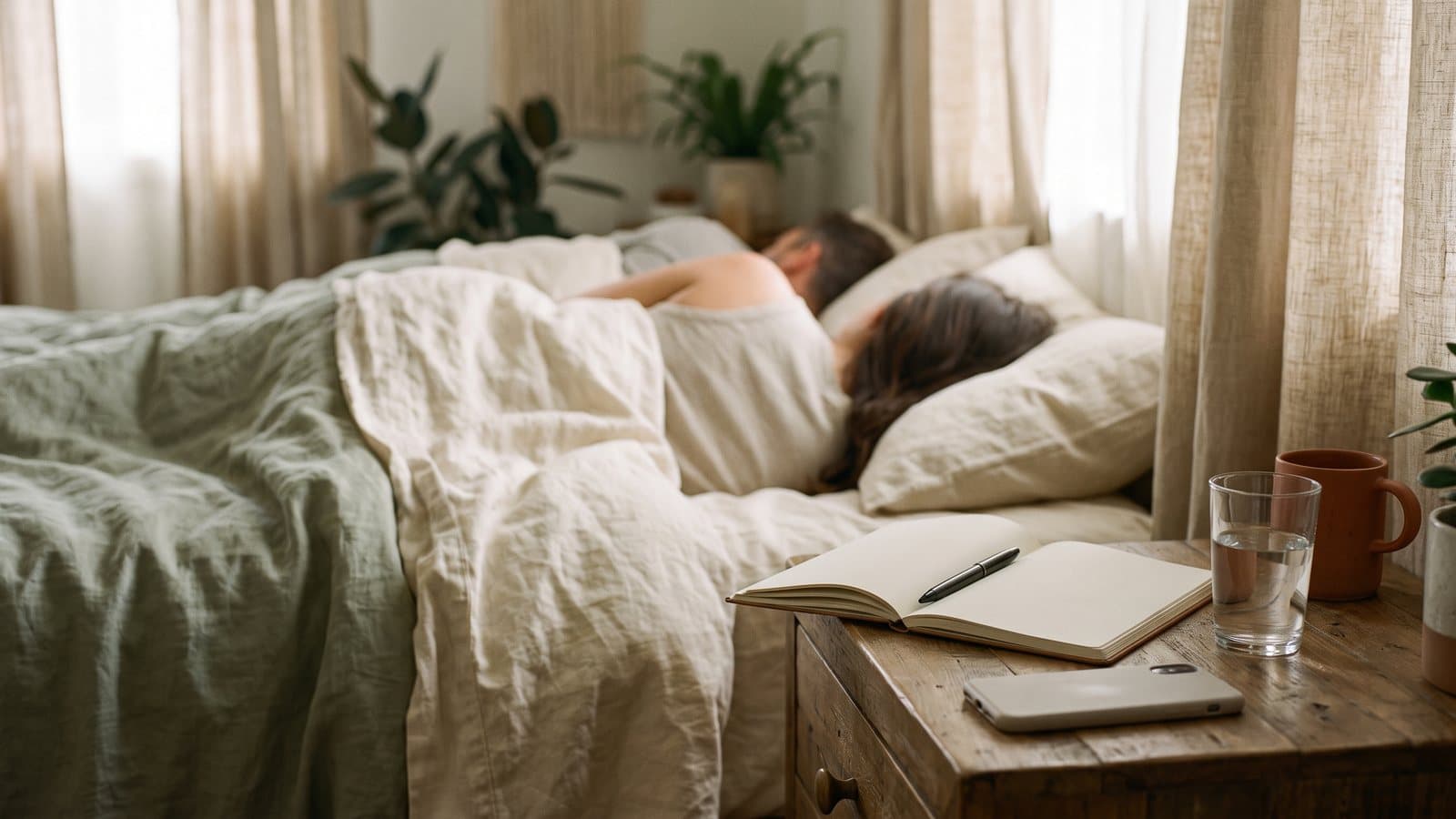
Summer has a way of hiding sleep habits. Late nights, guest rooms, a box fan humming in a vacation rental. Then late August arrives, the alarms come back, and on an ordinary weeknight, in the new quiet, someone notices the snoring again. Maybe it is steady. Maybe it goes silent, then restarts with a snort.
That is usually when the question shows up: is this just snoring, or could it be sleep apnea? Snoring vs. sleep apnea is one of the most common things people wonder about once a partner mentions it, and the honest answer has a few layers.
At Austin Sleep & Airway Health, we help adults sort out what they are hearing and feeling. This guide covers what separates the two, what the sound and your daytime energy can hint at, what to track during your end-of-summer reset, and when an evaluation is worth scheduling.
Snoring vs. Sleep Apnea: The Short Answer
Snoring is a sound. Air moving through a relaxed, narrowed airway makes the soft tissues in the back of the throat vibrate. The American Academy of Otolaryngology, Head and Neck Surgery notes that nearly half of adults snore, so snoring on its own is very common.
Obstructive sleep apnea is a breathing pattern. During sleep, the airway repeatedly narrows or closes, so breathing turns shallow or pauses before starting again. MedlinePlus describes breathing that partly or completely stops for more than 10 seconds, followed by gasping or snorting, in a cycle that repeats through the night.
The two overlap, which is why they get confused. The American Academy of Sleep Medicine (AASM) notes that snoring is the most common symptom of sleep apnea, but not everyone who snores has it, and some people with sleep apnea barely snore. Clues can point you in a direction, but only a physician can diagnose sleep apnea, through a home sleep test or an in-lab sleep study.
What Does Sleep Apnea Snoring Sound Like?
The patterns below are clues, not answers. None confirms or rules out anything, but each is worth describing to your doctor.
A steady, rhythmic snore
Snoring that stays fairly even from breath to breath often fits the picture of snoring alone. It can still disrupt a partner's sleep, and MedlinePlus lists back sleeping, alcohol near bedtime, and a stuffy nose among common triggers that can make it louder.
Snoring that goes quiet, then restarts with a gasp
The AASM describes snoring as more likely to be a sign of sleep apnea when it is followed by silent breathing pauses and choking or gasping sounds. Partners often describe a snore that builds, a stretch of silence, then a snort as breathing picks back up.
Other things a partner may notice
Restless tossing, waking with a start, or choking sounds can be part of the picture too. The National Heart, Lung, and Blood Institute (NHLBI) points out that you may not recognize nighttime signs until someone tells you, which is why a partner's observations matter.
Clues From Your Day, Not Just Your Night
How you feel during the day often says as much as the sound at night. The NHLBI lists daytime sleepiness, a dry mouth on waking, and getting up often to urinate among possible signs of sleep apnea. It also notes that fatigue, headaches, and insomnia are more common in women, one reason sleep apnea can be overlooked when snoring is quiet.
Someone who snores but wakes refreshed and stays alert may be dealing with snoring alone, though a physician is the one to confirm that. Snoring plus daytime drag, dozing in quiet moments, or a foggy head is a different pattern, and worth a closer look.
What to Track During Your End-of-Summer Reset
A new season is a natural time to pay attention. Two weeks of simple notes can turn a vague worry into something specific to bring to a visit:
- Sound. Record a few nights on your phone, or ask your partner to note when snoring gets louder, goes silent, or ends in a gasp.
- Mornings. Note whether you woke rested, with a dry mouth, or with a headache, and how often you got up overnight.
- Afternoons. Note when you feel sleepy, and whether you doze off while reading or riding as a passenger.
- Patterns. Write down your usual sleep position, alcohol near bedtime, and nasal congestion.
A recording is helpful context, not a verdict. A snoring app captures sound, but it does not measure breathing and oxygen the way a sleep study does, and the AASM's diagnostic testing guideline recommends against diagnosing sleep apnea from questionnaires or prediction tools alone.
If you have been trying fixes you saw online, our post on mouth taping for sleep and what to know first covers a popular one.
When Snoring Is Worth an Evaluation
Snoring alone is worth mentioning at your next checkup, especially if it is loud or nightly. It becomes more clearly worth an evaluation when it comes with pauses or gasps a partner has noticed, daytime sleepiness that a full night does not fix, recurring morning headaches or dry mouth, or snoring that has changed noticeably this past year.
It also helps to know which one you are dealing with before choosing a snoring remedy, because quieting the sound does not answer whether breathing is pausing. The clinical practice guideline from the AASM and the American Academy of Dental Sleep Medicine recommends oral appliances for adults who want treatment for primary snoring, meaning snoring without obstructive sleep apnea. In other words, the sleep apnea question usually gets answered by a sleep physician first.
How Austin Sleep & Airway Health Helps Sort Out Snoring and Sleep Apnea
Dr. Kacie Culotta, DMD, is a Diplomate of the American Board of Dental Sleep Medicine and a Qualified Dentist with the American Academy of Dental Sleep Medicine. Her role on your team is to look closely at the airway and connect the dots with your physicians.
Our airway-focused exam looks at tongue mobility and resting posture, oral ties, palate width, bite, jaw joints, tonsil size, nasal versus mouth breathing, and signs of clenching or grinding, along with a detailed sleep and health history. We may also use in-house 3D CBCT airway imaging, a quick scan (about 45 seconds, with low radiation exposure) of airway shape, volume, and structures such as the tonsils, adenoids, and nasal passages. CBCT is an awake, upright snapshot. It is not a sleep study and does not diagnose sleep apnea.
When sleep apnea is a question, we help coordinate sleep testing with your sleep physician, who makes the diagnosis. If you are diagnosed, oral appliance therapy is one option alongside CPAP, an effective, well-established first-line treatment, and some people use both. For adults whose main concern is snoring, laser soft palate tightening is a non-surgical, in-office option that may help reduce snoring vibration. We also collaborate with ENTs and with the independent myofunctional therapists in our on-site Myofunctional Collaborative Space.
As Dr. Culotta says, "Positive change is possible at any age. Awareness is the first step."
Frequently Asked Questions
Can you have sleep apnea without snoring?
Yes, some people with obstructive sleep apnea snore quietly or not at all, so the absence of loud snoring does not rule it out. Daytime signs such as fatigue, morning headaches, or broken sleep deserve attention too.
Why does my partner say I stop breathing when I snore?
A partner who hears your snoring go silent and then restart with a gasp or snort may be noticing breathing pauses, which are worth mentioning to your doctor. Ask them how often it happens, or have them record a short clip for your visit.
Can a snoring app tell if I have sleep apnea?
A snoring app can record sounds and help you spot patterns, but it cannot diagnose sleep apnea, because sound alone does not show breathing and oxygen levels. Recordings are still worth bringing to an appointment.
Is there any way to tell if you have sleep apnea without a sleep study?
No, a sleep study ordered by a physician, done at home or in a lab, is the only way to diagnose sleep apnea. Educational screenings and partner observations help you decide whether to ask for one.
Can snoring be treated if it is not sleep apnea?
Yes, snoring without sleep apnea, often called primary snoring, can be addressed with options such as custom oral appliances or in-office approaches that target tissue vibration. Many people also find that paying attention to triggers like back sleeping or alcohol near bedtime helps.
Where can I get my snoring checked in Austin?
Austin Sleep & Airway Health, at 1701 Simond Ave, Suite 107A in the Mueller area, offers airway-focused evaluations and coordinates sleep testing with your physician. Call (512) 900-9715 or email hello@austinsleephealth.com; we are open Monday, Tuesday, Thursday, and Friday.
A Calm Next Step for the New Season
If this season's reset has you listening a little more closely at night, our adult sleep and airway screening is an easy place to start. It is educational rather than a diagnosis, and your answers can help you decide whether to talk with your doctor about a sleep study or book an airway evaluation with Dr. Culotta, so you head into fall with a clearer picture of how you breathe at night.
By Austin Sleep & Airway Health
This article is for general education. It is not a diagnosis and does not replace an evaluation with a qualified provider.
Wondering whether a sleep evaluation is right for you?
Take our quick, educational adult sleep screening to better understand your risk factors and what to bring to a visit.
Keep Reading
Related articles

Sleep Apnea & Snoring
Acid Reflux at Night and Sleep Apnea: How They Connect
Acid reflux and sleep apnea often overlap at night. Here is what research says about the connection, what to notice, and when to get it checked.
Read more7 min read
Sleep Apnea & Snoring
Waking Up to Pee at Night: A Sleep Apnea Connection?
Waking up to pee at night more than once? It could be summer hydration, or your airway. Here is what is normal and worth mentioning at a visit.
Read more7 min read
Sleep Apnea & Snoring
Waking Up With a Headache? What It Could Mean
Waking up with a headache in Austin's summer heat? See how dehydration, jaw clenching, and sleep apnea can each play a role, and what to track.
Read more7 min read