
Sleep Apnea & Snoring
Waking Up to Pee at Night: A Sleep Apnea Connection?
Published 7 min read
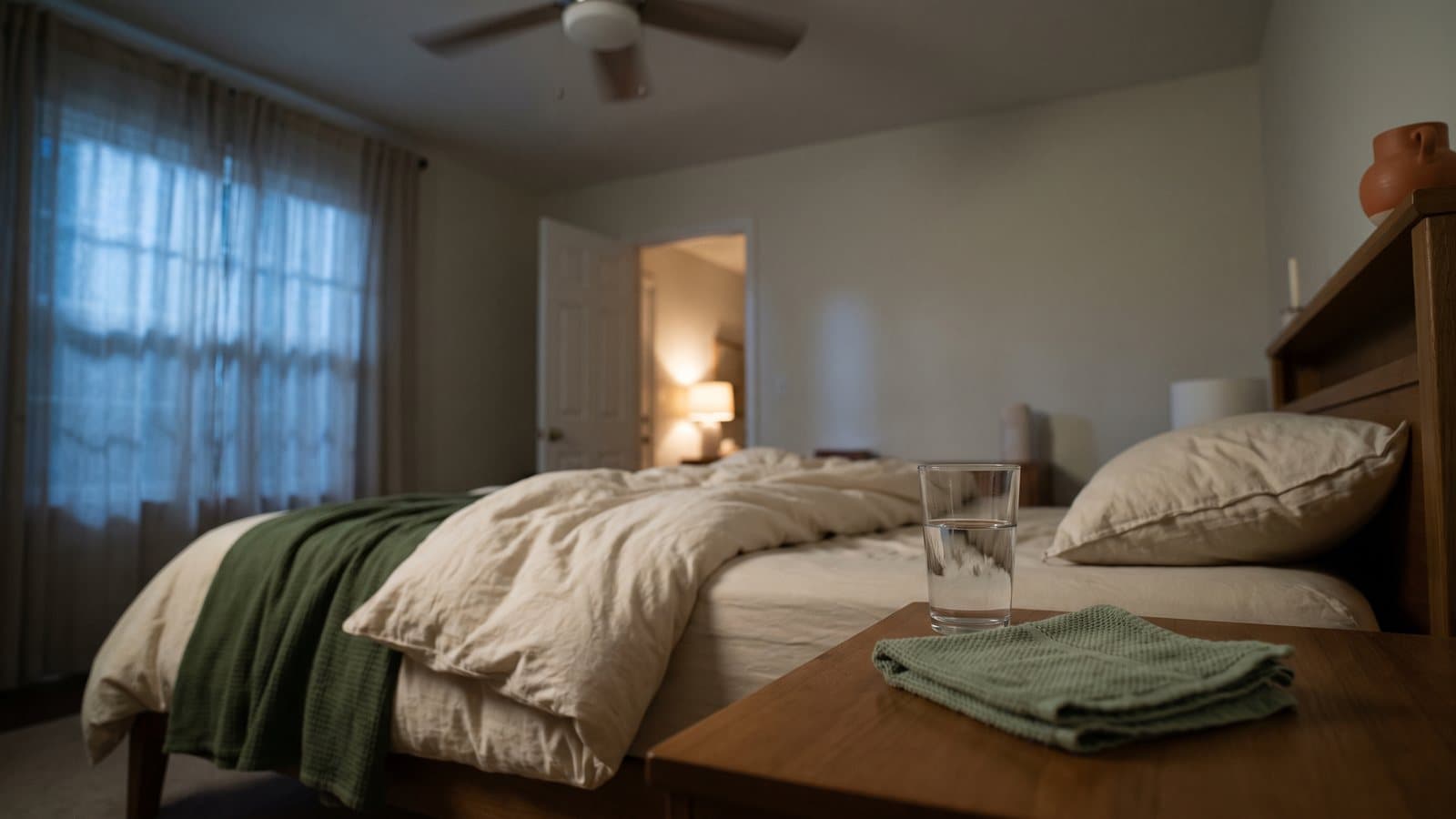
The 2 a.m. Bathroom Trip, Every Single Night
Late summer in Austin comes with a hydration reminder everywhere you look: refill your water bottle, drink more before you head outside, stay ahead of the heat. That advice is solid, and for a lot of people, a few extra glasses of water in the evening really do explain one extra trip to the bathroom overnight. But if you find yourself waking up to pee at night two, three, or more times on a regular basis, even on nights when you have not had anything unusual to drink, hydration alone may not be the whole story.
At Austin Sleep & Airway Health, we hear about this pattern often, usually from someone who has already ruled out the obvious explanations. This post walks through why sleep apnea can be part of why you are waking up at night to use the bathroom, what a normal amount of nighttime urination looks like, and what is worth tracking and mentioning at your next visit.
Waking Up to Pee at Night: Is It Your Bladder or Your Airway?
For most adults, sleeping six to eight hours without needing to get up is the norm, according to MedlinePlus. Waking up once, especially close to your usual wake time, is common and rarely a concern on its own. Waking up two or more times most nights has a name, nocturia, and it is worth paying attention to rather than just working around it.
Nocturia has plenty of explanations that have nothing to do with breathing: evening fluids, caffeine, alcohol, certain medications, an enlarged prostate, or an overactive bladder are common culprits. The American Academy of Sleep Medicine notes that nocturia can be a sign of obstructive sleep apnea, and some sleep researchers encourage clinicians to ask about nighttime bathroom trips when screening for sleep apnea, since the connection is often missed. The National Heart, Lung, and Blood Institute lists waking often at night to urinate among the symptoms people notice with sleep apnea, right alongside snoring and daytime tiredness.
Why Sleep Apnea Can Make You Urinate More at Night
The link is not about your bladder failing. When the airway narrows or closes during sleep, breathing effort increases against that blockage, and the resulting drop in oxygen and change in pressure inside the chest can prompt the heart to release a hormone called atrial natriuretic peptide, or ANP. The American Sleep Apnea Association explains that ANP signals the kidneys to release more sodium and water, which adds up to more urine production overnight, not because you drank more, but because your body is responding to the disrupted breathing itself.
The repeated arousals that come with sleep apnea play a role too. Each partial awakening that helps reopen the airway also makes you more likely to notice the urge to urinate, rather than sleeping through it. Research reviews on CPAP therapy have found that treating the underlying sleep apnea can reduce both how often people wake to urinate and how much urine they produce at night, which fits the hormonal explanation.
How Many Times a Night Is Normal?
There is no single number that applies to everyone, but a useful marker comes from sleep medicine itself: nocturia generally describes waking to urinate two or more times a night on a regular basis, not once in a while after a big glass of water before bed. One trip, especially if it lines up with when you naturally wake up anyway, is common at almost any age.
Age plays a role too, and nighttime urination becomes more common later in life for reasons that often have nothing to do with the airway, which is part of why sleep apnea's role in nocturia gets missed. The pattern worth noticing is not one rough night, but a steady habit most nights, especially alongside snoring, gasping, or a partner mentioning pauses in your breathing.
What to Track Before Your Next Visit
You do not need special equipment to gather useful information, just a notebook or a notes app by the bed for a week or two. Our guide on keeping a sleep log before your evaluation has a simple format if you want a head start. A few things worth writing down each morning: how many times you got up to urinate, roughly when, and how you felt the next day, tired, groggy, or headachy.
It also helps to note whether anyone has mentioned your snoring or breathing, whether you wake up with a dry mouth, and whether the pattern changes on nights when you drank less in the evening. If you already use CPAP, our post on finding CPAP more comfortable covers what to do if a poor mask fit is part of what is disrupting your night. Bringing a week of these notes to a doctor or dentist turns a vague complaint into something specific they can act on.
When Nighttime Waking Is Worth an Airway Evaluation
An occasional bathroom trip after a big dinner or a hot day outside is not something to worry about. It is worth a closer look when you are waking two or more times most nights, when it is paired with loud snoring, gasping, or morning headaches, or when family has mentioned pauses in your breathing while you sleep.
None of these signs confirm sleep apnea on their own. Only a physician can diagnose sleep apnea, through a sleep study, and a pattern of nighttime urination is simply a reason to ask the question rather than assume it is only about how much water you drank.
How Austin Sleep & Airway Health Helps With Nighttime Waking
Dr. Kacie Culotta, DMD, is a Diplomate of the American Board of Dental Sleep Medicine and a Qualified Dentist with the American Academy of Dental Sleep Medicine. When nighttime urination is part of a bigger picture that includes snoring, tiredness, or witnessed breathing pauses, an airway focused exam looks at tongue mobility and resting posture, palate width, bite, jaw joints, tonsil size, nasal versus mouth breathing, and a detailed sleep and health history.
We also offer in-house 3D CBCT airway imaging, a scan that takes about 45 seconds and uses a low dose to show airway shape, volume, and structures such as the tonsils, adenoids, and nasal passages. It is an awake, upright snapshot, not a sleep study, and it does not diagnose sleep apnea on its own. When a physician confirms sleep apnea through a sleep study, oral appliance therapy is one option we discuss: a custom device that holds the lower jaw slightly forward, used alongside CPAP or on its own depending on what your physician recommends. As Dr. Culotta puts it, "It's never too late to breathe, sleep, and feel better."
Frequently Asked Questions
Why do I wake up to pee every night?
Frequent nighttime urination, called nocturia, has several possible causes, including evening fluids, caffeine, an enlarged prostate, an overactive bladder, and obstructive sleep apnea. Sleep apnea disrupts breathing and pressure inside the chest in a way that can trigger extra urine production overnight, so it is worth mentioning to your doctor if the pattern is regular.
Is it normal to wake up to pee once or twice a night?
Waking up once is common, especially if it happens close to your usual wake time, and is rarely a sign of anything concerning on its own. Waking up two or more times most nights is generally what sleep and urology specialists mean by nocturia, and it is worth mentioning at your next visit.
Can sleep apnea cause frequent nighttime urination?
Yes, sleep apnea is a recognized cause of nocturia, and sleep medicine sources note the two are commonly connected. The connection involves a hormone called ANP that increases urine production when breathing is repeatedly disrupted overnight.
Does treating sleep apnea reduce nighttime bathroom trips?
Research reviews on CPAP therapy have found that treating obstructive sleep apnea can reduce both how often people wake to urinate and how much urine they produce at night. Results vary by person, and any treatment decision should be made with your physician based on a confirmed diagnosis.
Is nighttime urination the same as an overactive bladder?
No, nocturia and overactive bladder can overlap, but they are not the same thing, and both can happen alongside sleep apnea. An overactive bladder involves urgency and frequency during the day too, while sleep apnea related nocturia tends to show up specifically at night.
Should I mention nighttime urination to my dentist or doctor?
Yes, mentioning how often you wake to urinate, along with snoring, tiredness, or witnessed breathing pauses, gives your doctor or dentist a fuller picture of your overnight health. It is a small detail that is easy to dismiss but can point toward an airway issue worth evaluating.
Where can I get evaluated for sleep apnea and nighttime urination in Austin?
Austin Sleep & Airway Health, at 1701 Simond Ave, Suite 107A in the Mueller area, offers airway focused evaluations and coordinates sleep testing with your physician. Call (512) 900-9715 or email hello@austinsleephealth.com; we are open Monday, Tuesday, Thursday, and Friday.
A Calm Next Step
If waking up to pee at night has become a regular pattern rather than an occasional inconvenience, our adult sleep and airway screening is a simple, educational place to start. It will not diagnose anything on its own, but your answers can help you decide whether a conversation with your physician about a sleep study, or an airway evaluation with Dr. Culotta, makes sense.
By Austin Sleep & Airway Health
This article is for general education. It is not a diagnosis and does not replace an evaluation with a qualified provider.
Wondering whether a sleep evaluation is right for you?
Take our quick, educational adult sleep screening to better understand your risk factors and what to bring to a visit.
Keep Reading
Related articles

Sleep Apnea & Snoring
Acid Reflux at Night and Sleep Apnea: How They Connect
Acid reflux and sleep apnea often overlap at night. Here is what research says about the connection, what to notice, and when to get it checked.
Read more7 min read
Sleep Apnea & Snoring
Waking Up With a Headache? What It Could Mean
Waking up with a headache in Austin's summer heat? See how dehydration, jaw clenching, and sleep apnea can each play a role, and what to track.
Read more7 min read
Sleep Apnea & Snoring
Snoring During Pregnancy: What's Common and When to Ask
Snoring during pregnancy is common, especially by the third trimester. What causes it, what to track, and when it is worth asking your OB or midwife.
Read more7 min read