Kids & Teens
ADHD and Sleep Apnea in Children: Where Symptoms Overlap
Published 7 min read
The Rating Forms on the Kitchen Counter
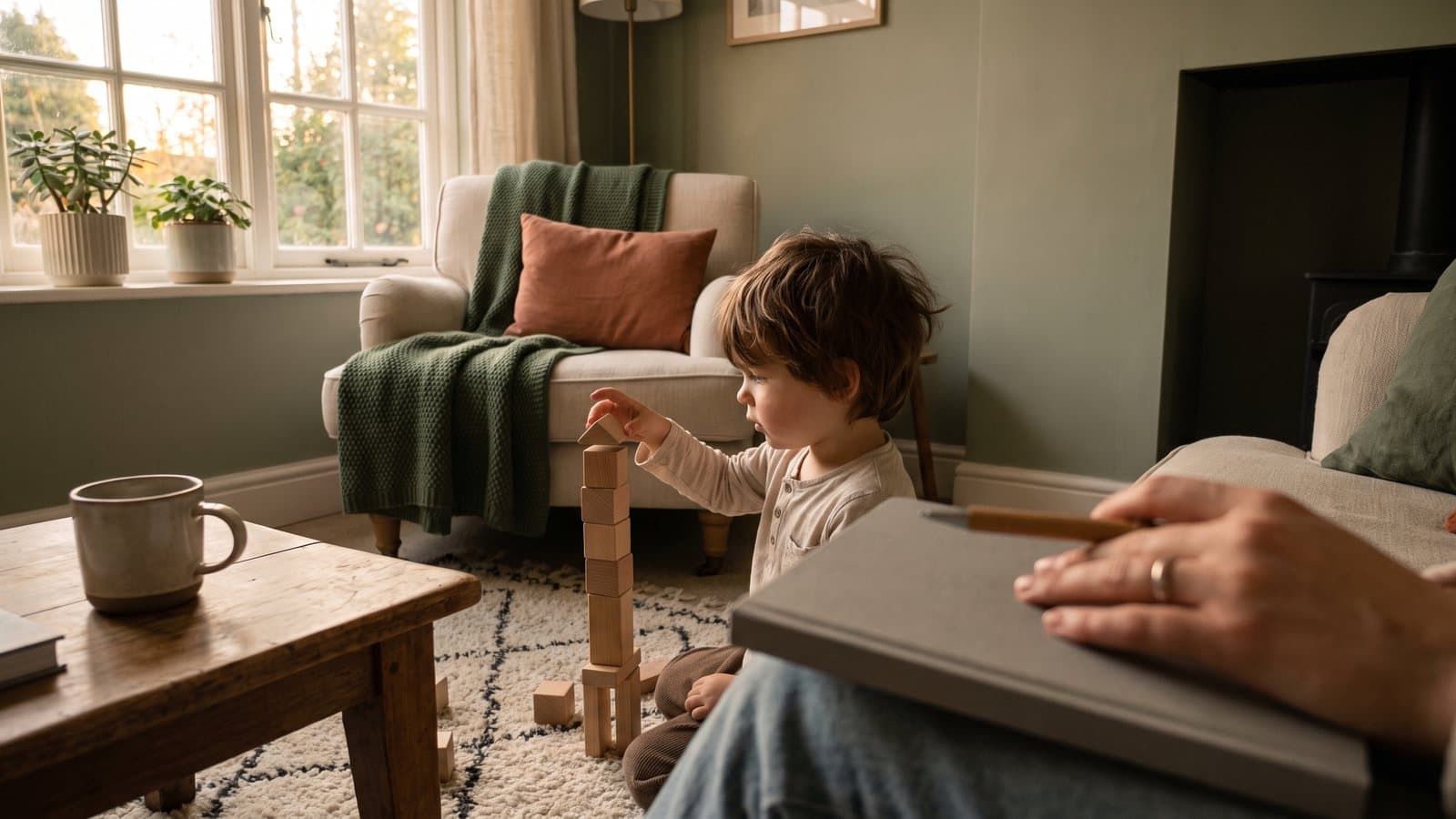
The forms from your pediatrician are sitting on the counter: one for you, one for your child's teacher, both asking how often your child fidgets, drifts off task, or interrupts. You fill yours out after dinner. Later, walking past your child's room, you hear the same soft snoring you've heard for years and never thought twice about.
That moment is worth a pause. Pediatric guidelines and research recognize that ADHD and sleep apnea in children can share daytime signs, and that the two can also show up together. October is ADHD Awareness Month, a good time to add one more question: how is my child breathing at night?
At Austin Sleep & Airway Health, we look at sleep from the airway's point of view. Below, you'll find what the overlap looks like, what the research does and doesn't show, what to track, and how to raise it with your pediatrician without second-guessing your child's current care.
How ADHD and Sleep Apnea in Children Can Overlap
The short answer: disrupted breathing during sleep can produce attention and behavior symptoms that look like ADHD, and it can also sit alongside an ADHD diagnosis. The American Academy of Pediatrics (AAP) lists difficulty paying attention and behavior problems among the possible signs of sleep apnea in children, next to frequent snoring and daytime sleepiness. The National Heart, Lung, and Blood Institute adds being overactive and having trouble paying attention at school.
Part of the reason is how children respond to poor sleep. Many adults get slow and quiet when short on rest. Children often do the opposite, getting busier, more impulsive, and quicker to frustration. The Centers for Disease Control and Prevention includes sleep disorders among the conditions with symptoms similar to ADHD.
Overlap doesn't mean one explains the other. A child can have ADHD and sleep-disordered breathing at the same time, and each can make the other harder to manage. The goal isn't choosing between them. It's making sure both the days and the nights are part of the picture.
Does Snoring Cause ADHD? What the Research Shows
Researchers have studied this link for years, and the findings point to a real connection without simple answers. A large UK study published in Pediatrics in 2012 found that children with snoring, mouth breathing, or pauses in breathing early in life were more likely to show behavior difficulties, including hyperactivity, by age 7.
Treatment research adds nuance. In the Childhood Adenotonsillectomy Trial, published in the New England Journal of Medicine in 2013, children ages 5 to 9 with sleep apnea who had tonsils and adenoids removed showed greater improvements in behavior, quality of life, and sleep symptoms than children in a watchful-waiting group. Their scores on formal attention and executive function testing, however, did not differ significantly between the groups.
A headline claiming that tonsil surgery solves ADHD goes further than the evidence. What the research supports is that sleep-disordered breathing is worth identifying and treating on its own terms, and that better sleep may help support better days for some children. It is not a replacement for ADHD care.
Should Sleep Be Part of an ADHD Evaluation?
Yes, and your pediatrician's own guidelines say so. The AAP's 2019 clinical practice guideline on ADHD advises clinicians to screen for coexisting conditions during an evaluation, naming sleep apnea alongside anxiety, learning and language disorders, and tics. A separate AAP guideline recommends asking about snoring at routine checkups and a sleep study for children who snore and show other signs of disrupted sleep.
Mentioning your child's snoring or restless nights isn't second-guessing anyone. It's information the evaluation is designed to include. Only a physician can diagnose sleep apnea, through a sleep study, and only a qualified clinician can diagnose ADHD.
If your child already has an ADHD diagnosis, none of this is a reason to doubt it or change their plan on your own. Keep working with the clinician who manages your child's ADHD care, share what you notice at night, and decide together whether a sleep evaluation makes sense.
What to Track at Night and During the Day
Good notes turn a vague worry into something your child's care team can use. For two weeks, keep a simple log on your phone or the fridge, capturing both halves of the day:
- Bedtime, lights-out, and wake-up time, and how hard the wake-up was
- Snoring, mouth breathing, gasps or snorts, or restless sleep when you check in
- Night waking or bedwetting beyond the age you'd expect
- When focus and mood are hardest, and whether tough days tend to follow rough nights
- Teacher comments about energy, focus, or dozing in class
If you hear snoring, record a one-minute audio or video clip from the doorway, one of the most helpful things to bring to a visit. Check the basics too: the American Academy of Sleep Medicine recommends 9 to 12 hours of sleep per 24 hours for ages 6 to 12. If the school-year routine is still settling, our post on back-to-school sleep and airway signs walks through a gentle reset.
When Is It Worth an Evaluation?
A closer look is worth scheduling if your child snores most nights, breathes through the mouth much of the time, or wakes up unrefreshed, especially when attention or behavior concerns are also on the table. If an ADHD evaluation is already underway, that's an ideal moment to hand your pediatrician your log.
If you notice pauses in breathing or gasping, there's no need to wait out the two weeks; mention it to your pediatrician soon. Snoring alone is common: ENThealth.org, from the American Academy of Otolaryngology, notes that about one in ten children snore regularly, while a smaller share have obstructive sleep apnea, and that sleep-disordered breathing can contribute to attention problems in some children.
The point isn't to worry, but to give nights the same attention as days. Our guide to what child snoring can mean covers the nighttime side in more detail.
How Austin Sleep & Airway Health Helps When Sleep and Attention Overlap
We don't diagnose ADHD or sleep apnea, and we don't manage ADHD care. We add a careful look at the airway, one more piece of the picture for your pediatrician and your child's other clinicians.
Dr. Kacie Culotta, DMD, is a Diplomate of the American Board of Dental Sleep Medicine with over a decade of experience as a family dentist, lactation counselor, and myofunctional specialist. A visit starts with a detailed sleep and health history, your log is perfect here, and an airway-focused exam of tongue mobility, oral ties, palate width, bite, tonsil size, and nose versus mouth breathing. When helpful, in-house 3D CBCT airway imaging shows the nasal passages, tonsils, adenoids, and jaw position in about 45 seconds at low radiation. It's an awake snapshot, not a sleep study, and it does not diagnose sleep apnea.
From there, next steps depend on your child: coordinating with your pediatrician and a sleep physician about testing, an ENT visit to look at the tonsils and adenoids, a conversation about jaw growth, or working with the independent therapists in our Myofunctional Collaborative Space. As Dr. Culotta says, "Positive change is possible at any age. Awareness is the first step."
Frequently Asked Questions
Can a child have both ADHD and sleep apnea?
Yes, a child can have ADHD and sleep apnea at the same time, and each one can make the other's daytime effects harder to manage. That's one reason the AAP's ADHD guideline asks clinicians to screen for sleep apnea during an evaluation.
Can removing tonsils and adenoids help ADHD symptoms?
For some children with sleep apnea, removing enlarged tonsils and adenoids may help support better sleep and behavior, but it is not a treatment for ADHD itself. That decision belongs to an ENT and your pediatrician, usually after a sleep study.
Does my child need a sleep study before starting ADHD treatment?
That's a decision for your child's physicians, and it doesn't need to hold up ADHD care, but it's reasonable to ask about a sleep evaluation if your child snores or sleeps poorly. Bring your log and any audio clips so they can weigh both concerns together.
Why does my child with ADHD have trouble falling asleep?
Trouble settling down at night is common in children with ADHD and can have many causes, so it's worth raising with your child's clinician. Bring specifics, such as how long it takes to fall asleep, so they can weigh whether anything else, including breathing, is part of the picture.
Where can I get my child's airway evaluated in Austin?
Austin Sleep & Airway Health offers airway-focused evaluations for kids and teens at 1701 Simond Ave, Suite 107A, in Austin's Mueller area. Call (512) 900-9715 or email hello@austinsleephealth.com. We're open Monday, Tuesday, Thursday, and Friday, 8:00 AM to 3:00 PM.
A Calm Next Step This ADHD Awareness Month
If some of this sounds familiar, a simple place to start is our educational sleep screening for ages 6 to 12. It won't diagnose anything, but it can help you organize what you're seeing before your next conversation with your pediatrician or with us. When you're ready, Dr. Culotta and our team would be glad to take a closer look at how your child breathes and sleeps, working alongside the people already caring for your child.
By Austin Sleep & Airway Health
This article is for general education. It is not a diagnosis and does not replace an evaluation with a qualified provider.
Wondering about your child's sleep and breathing?
Our educational screening for children ages 6 to 12 takes a few minutes and helps you decide whether an airway evaluation is worth a look.
Keep Reading
Related articles
Kids & Teens
Why Is My Teenager Always Tired?
If your teenager is always tired despite sleeping in on weekends, here is what is typical teen sleep biology and when airway signs deserve a look.
Read more7 min read
Kids & Teens
Thumb Sucking and Teeth: What Summer Break Reveals
Thumb sucking and teeth: how a habit that lingers past toddler years can shape a child's bite and breathing, plus what to try this summer break.
Read more7 min read
Kids & Teens
Bedwetting and Sleep Apnea: Could Breathing Be a Factor?
Bedwetting and sleep apnea can be connected in some children. Learn common causes, how breathing may factor in, and when a closer look helps.
Read more7 min read