Sleep Apnea & Snoring
Does Alcohol Make Snoring Worse? A Holiday Sleep Guide
Published 7 min read
A Holiday Toast, and the Snore That Follows
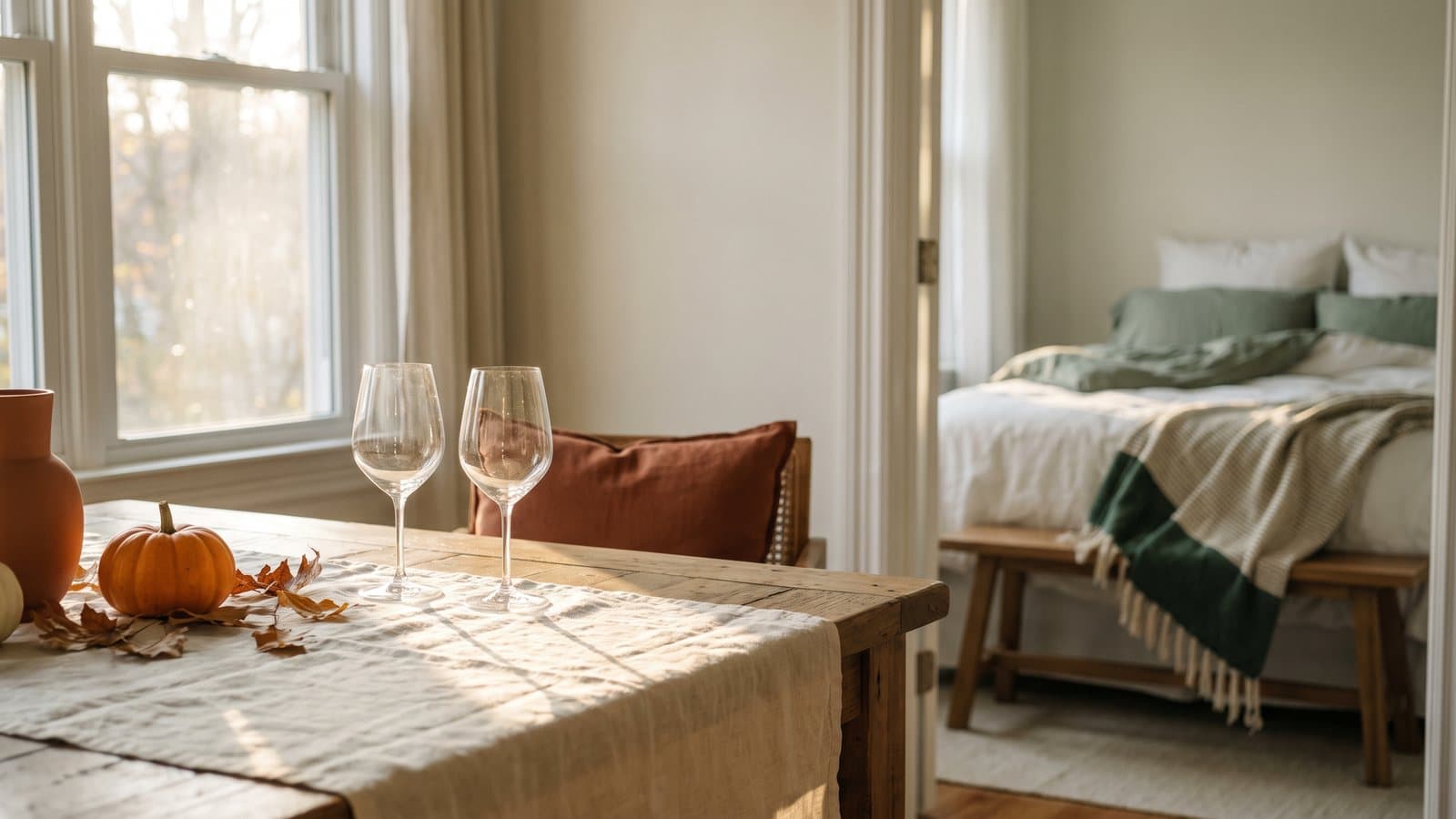
Thanksgiving is a little over a week away, and the house is about to fill up: pie cooling on the counter, a football game playing low in the background, a glass of wine or two passed around after dinner before everyone heads off to bed early and full. Then, sometime after midnight, someone in the guest room hears it: snoring that sounds louder than they remembered, maybe with a pause and a snort that makes them sit up and listen.
It is a familiar holiday pattern. Alcohol and snoring tend to show up together this time of year, and a lot of people notice it first during a season with extra gatherings, extra house guests, and extra people paying close attention to who sleeps how. The question that follows is usually some version of: is a heavier snore after a few drinks something to think about, or just a normal side effect of a festive night?
At Austin Sleep & Airway Health, we hear versions of this question often as the holidays approach. This guide walks through what alcohol actually does to your airway overnight, what is worth noticing this season, and when it might be worth a closer look, without any holiday shaming.
Does Alcohol Make Snoring Worse?
For most people, yes. Alcohol is a muscle relaxant, and that relaxation reaches the muscles of the tongue, soft palate, and throat that normally help hold your airway open while you sleep. When those muscles go slack, the airway narrows, and the tissue at the back of the throat vibrates more as air moves past it, which is what produces the sound of snoring.
The National Heart, Lung, and Blood Institute notes that drinking alcohol can raise the risk of sleep apnea, because it relaxes the muscles of the mouth and throat and may allow the upper airway to close more easily. A systematic review and meta-analysis published in Otolaryngology, Head and Neck Surgery looked at the existing research on alcohol and sleep breathing and found that alcohol was linked to more severe snoring and lower oxygen levels in people already prone to snoring or sleep apnea. The same review did not find clear evidence that alcohol caused snoring in people who do not otherwise snore.
Why One Night of Drinks Can Change How You Sleep
Alcohol does more than relax your airway. MedlinePlus lists alcohol use among the factors that affect muscle tone and sleep quality overnight, alongside things like sleeping on your back or dealing with a stuffy nose. Alcohol can also help you fall asleep faster at first, while making it harder for your sleep to stay deep and restorative later in the night.
That combination, a more relaxed airway plus a night of lighter, more fragmented sleep, is part of why a holiday gathering with a few drinks can produce a rougher night than usual, for you and for anyone sleeping near you. It is one night. It does not mean something has permanently changed about your airway, but it can be a useful preview of how your airway behaves when it is not at its most alert.
What to Notice This Holiday Season
You do not need to track every drink to get something useful out of this season. A few simple notes over a week or two of gatherings can turn a vague comment about your snoring into something specific to bring to a doctor or dentist if you want a second opinion:
- Whether the snoring was steady, or whether it went quiet and then restarted with a gasp or snort.
- How you felt the next morning: rested, groggy, with a dry mouth, or with a headache.
- Whether the pattern is different on nights with alcohol compared to nights without.
Family gathered under one roof for the holidays are often the first to notice, simply because more people are sleeping nearby and paying attention. If someone mentions your snoring this season, treat it as useful information rather than something to brush off or feel embarrassed about.
When Snoring After Drinking Is Worth an Evaluation
Louder snoring after a holiday party, on its own, is common and usually nothing to worry about. It is worth a closer look when the pattern shows up on ordinary nights too, not just after drinking, or when it comes with pauses, gasping, or choking sounds that a partner or family member notices. If you are still not sure whether what you are hearing is ordinary snoring or something more, our guide on telling snoring from sleep apnea walks through the difference.
Morning headaches, a persistently dry mouth, or daytime sleepiness that does not clear up once the holidays are over are also worth mentioning to your doctor. If you already use CPAP and find that alcohol makes the mask harder to tolerate some nights, our post on finding CPAP more comfortable has a few practical starting points.
None of these signs confirm anything on their own. They are simply worth describing at a visit, whether that is with your physician, your dentist, or Dr. Culotta's team, so the right next step can be sorted out with the person qualified to make that call.
How Austin Sleep & Airway Health Helps With Alcohol and Snoring
Dr. Kacie Culotta, DMD, is a Diplomate of the American Board of Dental Sleep Medicine and a Qualified Dentist with the American Academy of Dental Sleep Medicine. Her focus is the airway itself: what is narrowing it, and why, whether that shows up after a holiday drink or every single night.
An airway focused exam looks at tongue mobility and resting posture, palate width, bite, jaw joints, tonsil size, nasal versus mouth breathing, and signs of clenching or grinding, along with a detailed sleep and health history. When it is useful, we also offer in-house 3D CBCT airway imaging, a scan that takes about 45 seconds and uses a low dose to show airway shape, volume, and structures such as the tonsils, adenoids, and nasal passages. It is an awake, upright snapshot, not a sleep study, and it does not diagnose sleep apnea on its own.
If snoring is a bigger, ongoing concern once the holidays wind down, oral appliance therapy is one option we discuss: a custom device that holds the lower jaw slightly forward to help keep the airway open. It sits alongside CPAP, an effective, well established option, and some people use both. We also coordinate with sleep physicians when a sleep study is the right next step, since only a physician can diagnose sleep apnea. As Dr. Culotta puts it, "Positive change is possible at any age. Awareness is the first step."
Frequently Asked Questions
Does alcohol make snoring worse?
For most people who already snore, yes, alcohol tends to make it louder and more frequent by relaxing the muscles that hold the airway open. Research reviews have linked alcohol to more severe snoring and lower oxygen levels in people already prone to snoring, though it does not appear to cause snoring in people who do not otherwise snore.
Why do I snore more after drinking?
Alcohol relaxes the muscles of your tongue, soft palate, and throat, so the airway narrows more than usual and the surrounding tissue vibrates louder as you breathe. The effect tends to be stronger the closer to bedtime you drink, which is part of why holiday nights can sound different from an ordinary one.
How long before bed should I stop drinking to help with snoring?
There is no single number that fits everyone, and different sources suggest different windows, so this is more about giving your body some time than hitting an exact hour. Many people find that spacing their last drink further from bedtime, and staying hydrated, makes a noticeable difference in how they sound and feel the next morning.
Does drinking alcohol make CPAP harder to use?
Some people find that alcohol makes CPAP less comfortable on a given night, since a more relaxed airway can mean more mouth breathing or mask leaks. That does not mean CPAP should be skipped after drinking. If anything, a night with alcohol is when the airway needs that support the most.
Can one holiday drink mean I have sleep apnea?
No, one drink or one loud night of snoring does not mean you have sleep apnea, and only a physician can make that diagnosis through a sleep study. What matters more is whether snoring, pauses, or daytime tiredness show up on ordinary nights too, well after the holidays have ended.
Where can I get help with snoring in Austin?
Austin Sleep & Airway Health, at 1701 Simond Ave, Suite 107A in the Mueller area, offers airway focused evaluations and coordinates sleep testing with your physician. Call (512) 900-9715 or email hello@austinsleephealth.com; we are open Monday, Tuesday, Thursday, and Friday.
A Calm Way to Start the Holidays
If this season has you listening a little more closely at night, whether it is your own snoring or a partner's, our adult sleep and airway screening is an easy, educational place to start. It will not diagnose anything on its own, but your answers can help you decide whether a conversation with your doctor about a sleep study, or an airway evaluation with Dr. Culotta, makes sense once the holiday guests have gone home.
By Austin Sleep & Airway Health
This article is for general education. It is not a diagnosis and does not replace an evaluation with a qualified provider.
Wondering whether a sleep evaluation is right for you?
Take our quick, educational adult sleep screening to better understand your risk factors and what to bring to a visit.
Keep Reading
Related articles
Sleep Apnea & Snoring
Acid Reflux at Night and Sleep Apnea: How They Connect
Acid reflux and sleep apnea often overlap at night. Here is what research says about the connection, what to notice, and when to get it checked.
Read more7 min read
Sleep Apnea & Snoring
Waking Up to Pee at Night: A Sleep Apnea Connection?
Waking up to pee at night more than once? It could be summer hydration, or your airway. Here is what is normal and worth mentioning at a visit.
Read more7 min read
Sleep Apnea & Snoring
Waking Up With a Headache? What It Could Mean
Waking up with a headache in Austin's summer heat? See how dehydration, jaw clenching, and sleep apnea can each play a role, and what to track.
Read more7 min read