
Kids & Teens
Bedwetting and Sleep Apnea: Could Breathing Be a Factor?
Published 7 min read
Packing for Camp and Still Worried About Bedwetting
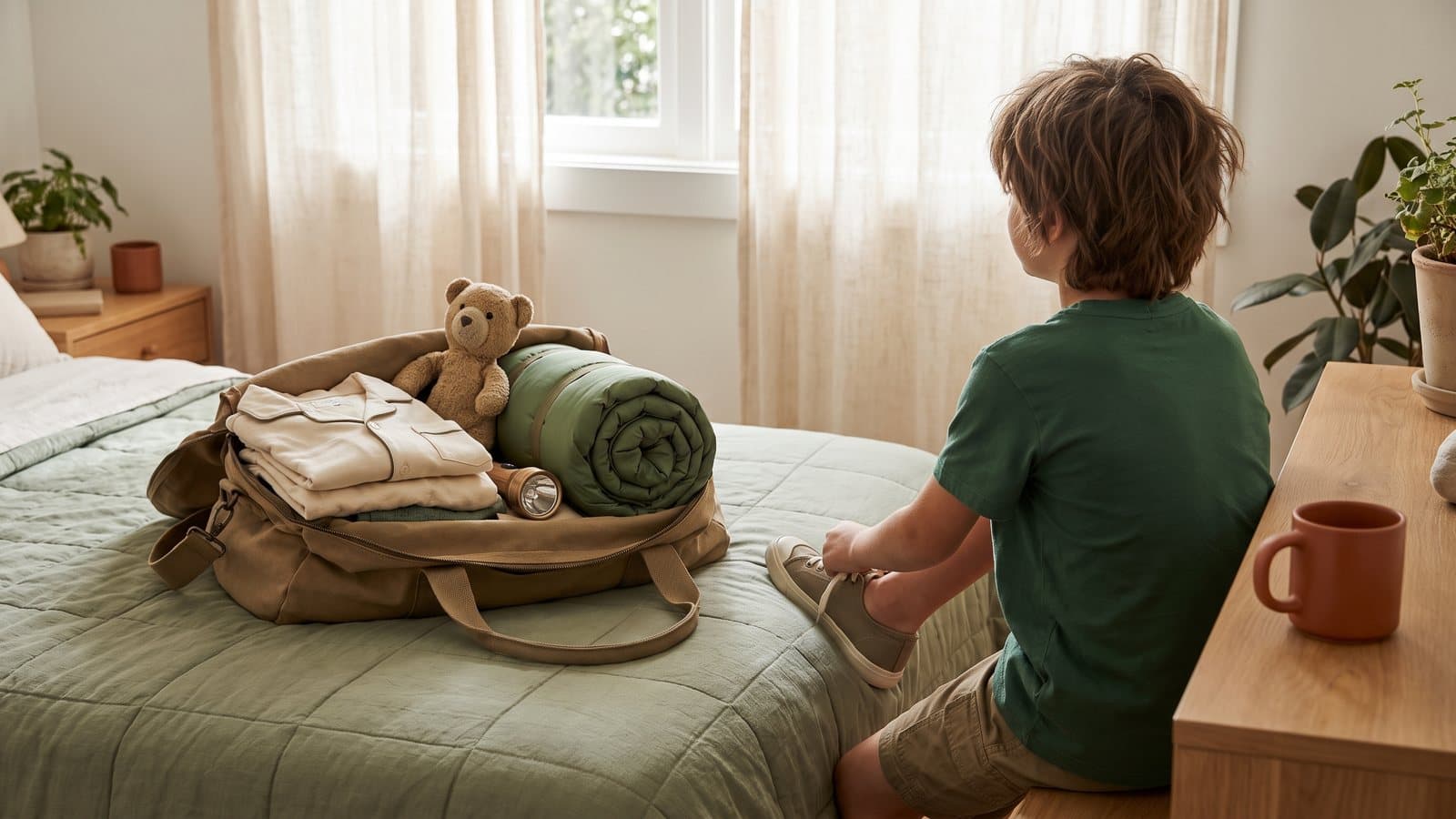
Summer camp forms are due, and the trunk is half packed with sunscreen, water shoes, and a flashlight. Then you get to the sleeping bag and pause: pack pull ups, just in case? For a lot of parents, this is the moment bedwetting stops feeling private and starts feeling like something a whole cabin might notice.
If you have been quietly researching bedwetting and sleep apnea, wondering whether the two are connected, you are not alone, and you are not doing anything wrong. Bedwetting past the toddler years is common, well documented, and rarely anyone's fault.
Austin Sleep & Airway Health works with families across Austin on exactly this question: what is ordinary development, and what might be worth a closer look, including how breathing fits into the picture.
Why Do Kids Wet the Bed at Night?
Nighttime wetting past the age most children stay dry is one of the most common reasons families see a pediatrician, and it is rarely about laziness or a stalled potty training effort. The National Institute of Diabetes and Digestive and Kidney Diseases notes that bedwetting often runs in families and tends to fade on its own as a child's body matures.
Several ordinary things can be at play: a bladder still learning to hold urine all night, a brain that does not yet reliably wake from deep sleep when the bladder is full, or overnight hormones that lag behind in some kids. The American Academy of Pediatrics adds that constipation and big changes, like a new school year or a camp routine, can trigger or worsen wetting, and notes that around 15 percent of 5 and 7 year olds still wet the bed some nights.
None of this means something is wrong with your child. It means their body is still catching up, on its own timeline.
Bedwetting and Sleep Apnea: What Researchers Are Finding
For some children, there may be another piece worth a look: breathing during sleep. A systematic review and meta-analysis published in the journal Sleep and Breathing in 2026, pooling data from more than 11,000 children across 15 studies, found that among kids with obstructive sleep apnea, close to 4 in 10 also experienced bedwetting.
That does not mean sleep apnea causes bedwetting, or that every child who wets the bed has a breathing problem. Most do not. The review's own authors were careful on this point, writing that the exact mechanisms linking the two conditions are not fully understood and that more research is needed to know which one, if either, drives the other.
What the research does suggest is that airway obstruction, often from enlarged tonsils or adenoids narrowing the airway, may in some children disrupt sleep depth and overnight hormone rhythms in ways that make it harder to stay dry. ENThealth.org, the patient education site of the American Academy of Otolaryngology, Head and Neck Surgery, lists snoring, restless sleep, and breathing pauses among the signs enlarged tonsils and adenoids can cause. Bedwetting is one clue worth mentioning, never proof on its own.
Sleep and Breathing Signs Worth Noticing
Bedwetting on its own tells you very little. It carries more meaning alongside other signs of disrupted breathing during sleep: snoring on most nights, mouth breathing, breathing pauses or gasping, or a child who tosses, sweats, and shifts positions all night, the kind of restless sleep many parents notice but do not always connect to breathing.
Daytime signs count too: a child who is hard to wake, unusually tired, or more irritable than expected after a full night in bed. None of these confirm anything alone. Together, they are worth mentioning to your child's doctor.
What You Can Do Now: A Two Week Sleep and Bedwetting Log
You do not need this figured out to start noticing. For about two weeks, a simple log turns scattered observations into something a doctor or Dr. Culotta can use.
- Wet and dry nights. Which nights were wet, and roughly what time.
- Sleep sounds. Snoring, mouth breathing, gasping, or long restless stretches.
- Mornings. Whether your child wakes easily or seems unusually tired.
- Fluids and bathroom habits. What and when your child drinks in the evening, and whether constipation has been an issue.
- Daytime. Energy, mood, and attention at school or at home.
A calm bedtime routine helps too, with a bathroom stop before lights out and easy bathroom access overnight. There is no need to wake a sleeping child just to check. The goal of the log is information, not pressure.
When Bedwetting Is Worth a Closer Look
Bedwetting alone, even past age 7, is common enough that it rarely needs urgent attention. It is worth a conversation with your child's pediatrician when a previously dry child starts wetting the bed again, when wetting continues most nights well past age 7, or when your child seems anxious about sleepovers and camp.
Add breathing signs to that conversation sooner: loud snoring most nights, mouth breathing, pauses or gasps, or restless, sweaty sleep alongside the wetting. Only a physician can diagnose sleep apnea, typically through a sleep study, so your pediatrician may involve an ENT or sleep physician.
Our role sits alongside that care. An airway focused evaluation looks at your child's tongue, jaw, palate, tonsils, and breathing patterns, and helps you see whether the airway is part of the picture worth exploring further.
How Austin Sleep & Airway Health Helps With Bedwetting and Sleep Signs
Dr. Kacie Culotta, DMD, a Diplomate of the American Board of Dental Sleep Medicine with over a decade of experience as a family dentist, lactation counselor, and myofunctional specialist, looks at the whole airway story, not just one symptom.
A visit starts with a detailed sleep and health history, where your two week log helps fill in the picture. The airway focused exam covers tonsil size, nasal versus mouth breathing, tongue mobility and resting posture, palate width, bite, and jaw joints.
When imaging is appropriate, our in-house 3D CBCT airway imaging takes about 45 seconds and uses a low level of radiation, giving Dr. Culotta an awake, upright view of airway shape and volume, along with the tonsils, adenoids, nasal passages, and jaw position. It is not a sleep study, and it does not diagnose sleep apnea or explain bedwetting on its own.
From there, we coordinate with your child's pediatrician, ENT, and sleep physician, and can involve the independent myofunctional therapists who work on-site in our Myofunctional Collaborative Space when a therapy plan makes sense. As Dr. Culotta says, "Positive change is possible at any age. Awareness is the first step."
Frequently Asked Questions
Can sleep apnea cause bedwetting in kids?
Sleep apnea does not directly cause bedwetting, but research shows the two occur together in a meaningful share of children with breathing problems during sleep. A 2026 review in the journal Sleep and Breathing found that close to 4 in 10 kids with obstructive sleep apnea also wet the bed, though the exact reason is not fully understood.
Is my child's bedwetting my fault?
No, bedwetting is not caused by anything you did or failed to do as a parent, and it is not a sign of laziness in your child. Most children who wet the bed have a bladder and brain that are still learning to communicate overnight, something that resolves with time in the large majority of kids.
Will my child outgrow bedwetting on their own?
Most children do outgrow bedwetting without any formal treatment, often as the bladder and the nighttime hormones that manage urine production mature. The National Institute of Diabetes and Digestive and Kidney Diseases notes that bedwetting tends to fade with age, though the exact timeline is different for every child.
Does snoring mean my child's bedwetting is related to breathing?
Snoring by itself does not confirm a breathing related cause for bedwetting, but it is one sign worth mentioning together with wetting to your child's doctor. Loud snoring most nights, mouth breathing, or pauses in breathing alongside bedwetting are worth a closer look, even though snoring alone is common and often harmless.
Will taking out my child's tonsils stop the bedwetting?
Removing enlarged tonsils and adenoids sometimes leads to fewer wet nights when breathing was part of the picture, but it does not resolve bedwetting for every child. That decision belongs to your child's ENT and pediatrician, based on airway findings, not on bedwetting alone.
At what age should I worry about bedwetting?
Bedwetting before about age 7 is considered a normal part of development and rarely needs evaluation on its own. Past that age, or if wetting restarts after months of staying dry, it is worth mentioning to your child's pediatrician, especially alongside snoring or restless sleep.
Where can I get my child's bedwetting and sleep evaluated in Austin?
Austin Sleep & Airway Health offers airway focused evaluations for kids and teens at 1701 Simond Ave, Suite 107A, in Austin's Mueller area. Call (512) 900-9715 to schedule, and we are glad to coordinate with your child's pediatrician, ENT, or sleep physician.
A Calm Step Before Camp Starts
If bedwetting has you wondering whether breathing is part of the story, you do not have to figure it out alone. Our educational sleep screening for ages 6 to 12 can help you organize what you have noticed, from wet nights to snoring, before you decide whether an evaluation makes sense. It does not diagnose anything, and whenever you are ready, our team is here to look at how your child breathes, sleeps, and grows.
By Austin Sleep & Airway Health
This article is for general education. It is not a diagnosis and does not replace an evaluation with a qualified provider.
Wondering about your child's sleep and breathing?
Our educational screening for children ages 6 to 12 takes a few minutes and helps you decide whether an airway evaluation is worth a look.
Keep Reading
Related articles
Kids & Teens
Why Is My Teenager Always Tired?
If your teenager is always tired despite sleeping in on weekends, here is what is typical teen sleep biology and when airway signs deserve a look.
Read more7 min read
Kids & Teens
Thumb Sucking and Teeth: What Summer Break Reveals
Thumb sucking and teeth: how a habit that lingers past toddler years can shape a child's bite and breathing, plus what to try this summer break.
Read more7 min read
Kids & Teens
Restless Sleep in Kids: Tossing, Sweating, and Your Child's Positions
Child restless sleep, including tossing, sweating, and odd positions, is common. Learn what it usually means and when to ask for a closer look.
Read more7 min read