Sleep Apnea & Snoring
The Best Sleeping Position for Sleep Apnea and Snoring
Published 7 min read
A Guest Bed, a Full House, and a Snore Nobody Mentioned Until Morning
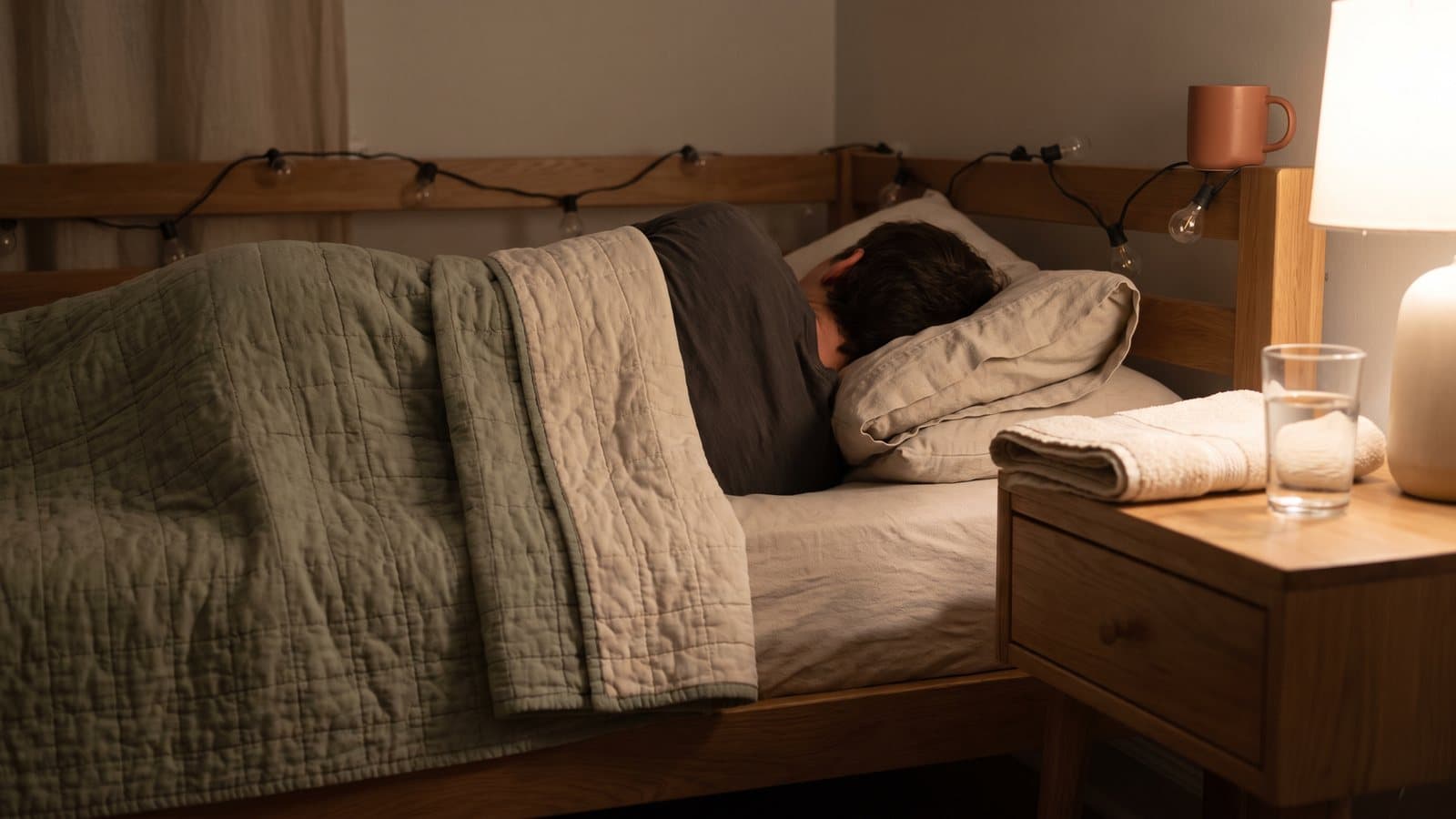
The guest room mattress is a little different than your own, and the house is fuller than usual this week. By the second morning, someone mentions, gently, that they heard you snoring through the wall. You slept your usual hours, yet woke with a dry mouth and a headache you can't quite explain.
If you're looking for the best sleeping position for sleep apnea or snoring right now, this is often exactly when the question comes up: an unfamiliar bed, a shared room, or a pull out couch that puts you flat on your back for the first time in months.
At Austin Sleep & Airway Health, we hear this question often around the holidays, when travel puts people in beds that aren't their usual setup. This post covers what position can and can't do, what research shows about side versus back sleeping, and when it's worth a closer look.
What Is the Best Sleeping Position for Sleep Apnea and Snoring?
For most people, side sleeping is the better starting position for snoring and mild obstructive sleep apnea, while sleeping flat on your back tends to make both worse. The National Heart, Lung, and Blood Institute advises people with sleep apnea to sleep on their side, not their back, because it can help keep the airway open. MedlinePlus gives similar guidance for snoring: avoid lying flat on your back, and try side sleeping instead.
The reason is gravity. Lying flat lets the tongue, soft palate, and other throat tissue settle backward and narrow the airway. On your side, that tissue has less room to fall. Position doesn't change the size or shape of your airway, but it changes how much room it has on a given night.
Why Back Sleeping Makes Snoring and Sleep Apnea Worse
Most people who snore notice it gets louder when they roll onto their back. That's the same gravity effect: the tongue and soft palate shift backward, the space narrows, and the vibration behind snoring increases. Our guide to how snoring differs from sleep apnea covers what that vibration does and doesn't tell you on its own.
Alcohol adds to the effect, since it relaxes throat muscles too, which is part of why alcohol tends to make snoring worse over the holidays, on top of whatever bed you're sleeping in.
Does Changing Position Actually Help, and Does It Matter Which Side?
Research backs the general pattern. Sleep specialists describe a subset of obstructive sleep apnea known as positional OSA, in which breathing events are markedly worse on the back than the side, using criteria first described by sleep researcher Rosalind Cartwright decades ago. A community based study in the Journal of Clinical Sleep Medicine found this pattern in a meaningful share of adults studied. Other research comparing positions found apneas and hypopneas more frequent on the back than either side, with no clear difference between left and right.
Either side appears to help about the same amount for most people, so it's reasonable to pick whichever feels more comfortable.
Stomach sleeping is different. It can also keep the tongue from falling back, but it tends to twist the neck and spine, and for CPAP users it often pushes the mask out of position. Our overview of what to try when struggling with CPAP covers mask options.
Practical Ways to Stay on Your Side All Night
Staying on your side through eight hours is harder than it sounds, especially in a bed that isn't yours.
The Tennis Ball Technique
Sewing a ball into the back of a sleep shirt makes back sleeping uncomfortable enough that most people shift to their side without fully waking. A randomized trial in the Journal of Clinical Sleep Medicine found this reduced time on the back and improved snoring and breathing counts, though separate research in the same journal found many people stop using it after a few months because it feels uncomfortable long term. It works best as a short term nudge, including for a few nights away from home.
Pillows and Positioning
A firm pillow along your back can serve the same purpose more gently, and a body pillow gives your arms and knees something to hold. Raising the head of the bed slightly can help mild snoring that's clearly worse lying flat, though it isn't a substitute for an evaluation if snoring is loud or comes with pauses in breathing.
Positional Trainers
Small wearable devices that gently vibrate when you roll onto your back have also been studied. In a trial comparing both approaches, a wearable trainer helped more participants reach a normal breathing event count than the ball method did.
What to Track About Your Sleep Position
A few nights of notes tell you more than one bad night ever will:
- Which position you fall asleep and wake up in, if you can tell.
- Whether a partner or roommate notices snoring, pauses, or gasping, and in which position.
- How you feel on waking, including dry mouth, headache, or a tired jaw.
- Whether alcohol or an unfamiliar bed seems to make it worse.
- If you use CPAP, whether your mask leaks more in certain positions.
A clear pattern, even a rough one, is more useful at a visit than "I snore sometimes."
When Sleep Position Alone Isn't Enough: When It's Worth an Evaluation
Adjusting position is worth trying and can meaningfully quiet snoring for some people. It's worth a look from a professional if snoring continues most nights regardless of position, if someone hears pauses or gasping, or if you wake unrefreshed even in your usual bed. Morning headaches, an unexplained dry mouth, and daytime sleepiness that doesn't ease with more sleep are worth mentioning to your doctor too.
Only a physician can diagnose sleep apnea, through a home sleep test or an in-lab study, and our comparison of home and in-lab sleep studies explains how each works. Position can shape how loud symptoms are, but it doesn't rule anything in or out on its own.
How Austin Sleep & Airway Health Helps With Snoring and Sleep Position
Dr. Culotta, a Diplomate of the American Board of Dental Sleep Medicine, looks past the pillow and mattress to the airway itself. Our airway focused exam checks tongue mobility, palate width, tonsil size, nasal versus mouth breathing, and clenching or grinding, alongside a detailed sleep and health history, including how snoring changes by position.
Our in-house 3D CBCT airway scan takes about 45 seconds, uses a low dose, and shows airway shape, volume, and structures like the tonsils, adenoids, nasal passages, and jaw position while you're awake and upright. It isn't a sleep study and doesn't diagnose sleep apnea, but it can show where the airway has less room to begin with, often part of why back sleeping makes such a difference.
From there, we coordinate with your sleep physician on testing, loop in an ENT when needed, and discuss options that fit what we find, from oral appliance therapy to non-surgical laser soft palate tightening for snoring.
Frequently Asked Questions
Is it better to sleep on your left side or right side with sleep apnea?
Either side appears to help about the same amount for most people, since it's the switch away from lying flat that matters most. Some smaller studies have looked for a consistent difference between the two sides and haven't found one.
Does the tennis ball trick for snoring actually work?
Yes, for many people it works short term by making back sleeping uncomfortable enough to prompt a shift to the side. Research in the Journal of Clinical Sleep Medicine found it reduced time on the back and improved snoring and breathing measures.
Is it safe to sleep on your stomach if you snore or have sleep apnea?
Stomach sleeping can reduce snoring for some people, but it often strains the neck and spine and can dislodge a CPAP mask. Most sleep clinicians suggest side sleeping first, since it offers a similar benefit without those drawbacks.
Will a wedge pillow or raising the head of your bed stop snoring?
A wedge pillow or a slightly raised head of the bed can help quiet mild snoring that's clearly worse lying flat. It works best alongside side sleeping, not instead of it.
Can changing your sleep position get rid of sleep apnea?
Changing position can meaningfully reduce breathing events for some people with mild, position dependent sleep apnea, but it does not change the underlying airway anatomy. Only a physician can confirm how well any approach is working through a follow up sleep test.
My CPAP mask keeps leaking when I roll onto my side, what should I do?
Mask leaks on your side are common and usually fixable with a different mask style, not a reason to avoid side sleeping. A nasal pillow style mask often sits lower and shifts less than a larger mask.
Where can I get help with snoring or a sleep position evaluation in Austin?
Austin Sleep & Airway Health offers airway evaluations, including in-house 3D CBCT imaging, at 1701 Simond Ave, Suite 107A, in Austin's Mueller area. Call (512) 900-9715 or email hello@austinsleephealth.com; open Monday, Tuesday, Thursday, and Friday, 8:00 AM to 3:00 PM.
Find Out What's Behind Your Snoring, Not Just the Position You Sleep In
If a guest bed or a shared room this season made your snoring impossible to ignore, that's useful information, not a verdict. Our educational adult sleep apnea screening can help you organize what you noticed.
By Austin Sleep & Airway Health
This article is for general education. It is not a diagnosis and does not replace an evaluation with a qualified provider.
Wondering whether a sleep evaluation is right for you?
Take our quick, educational adult sleep screening to better understand your risk factors and what to bring to a visit.
Keep Reading
Related articles
Sleep Apnea & Snoring
Acid Reflux at Night and Sleep Apnea: How They Connect
Acid reflux and sleep apnea often overlap at night. Here is what research says about the connection, what to notice, and when to get it checked.
Read more7 min read
Sleep Apnea & Snoring
Waking Up to Pee at Night: A Sleep Apnea Connection?
Waking up to pee at night more than once? It could be summer hydration, or your airway. Here is what is normal and worth mentioning at a visit.
Read more7 min read
Sleep Apnea & Snoring
Waking Up With a Headache? What It Could Mean
Waking up with a headache in Austin's summer heat? See how dehydration, jaw clenching, and sleep apnea can each play a role, and what to track.
Read more7 min read